How to Choose a Baptismal Cross for Orthodox Baptism
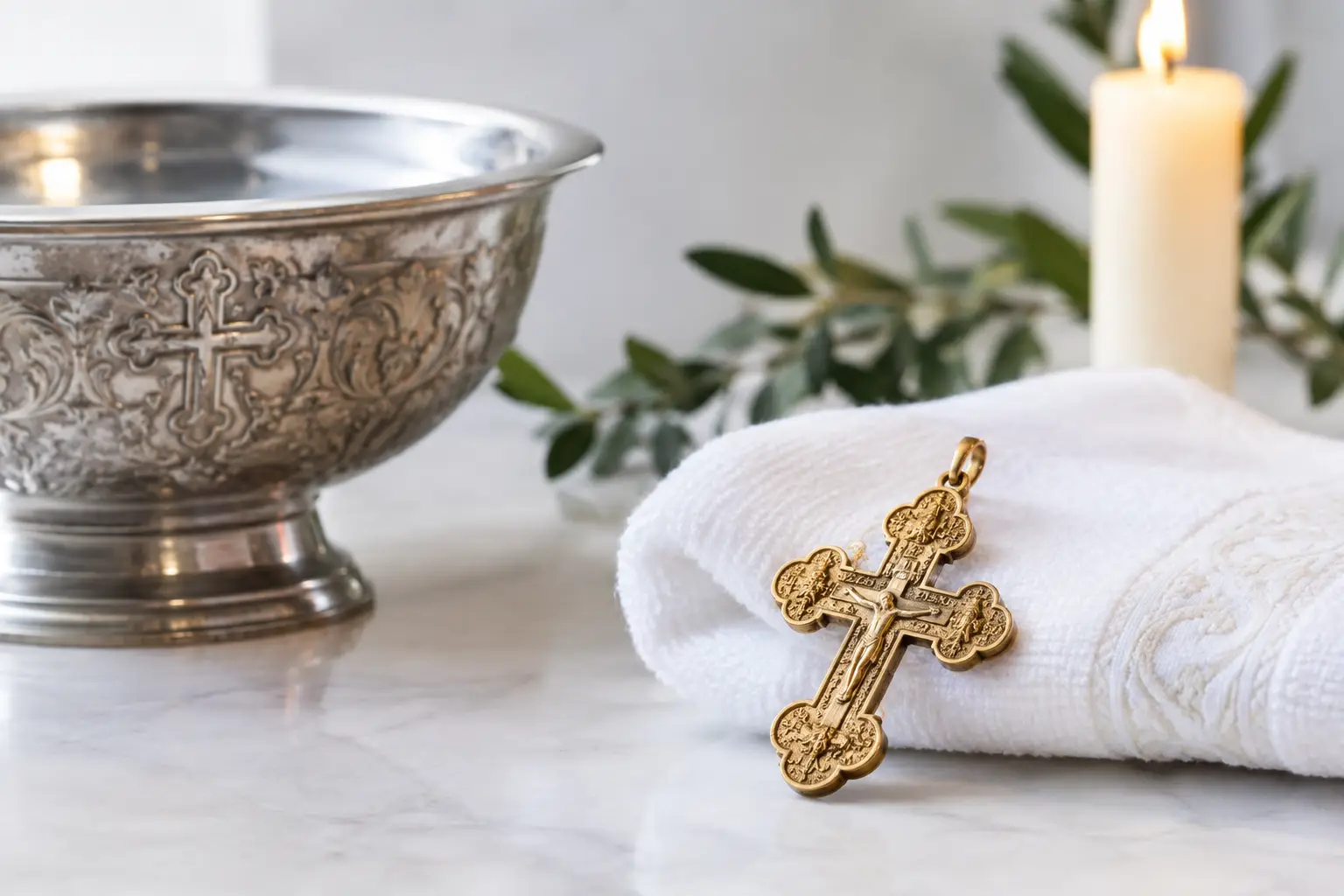
A baptismal cross is not simply a first piece of religious jewelry. It is the cross received at the beginning of a Christian life, a quiet reminder that the newly baptized has put on Christ. For families wondering how to choose a baptismal cross, the right answer begins with faith and practical care: select a cross that honors Orthodox tradition, may be worn safely, and can remain a companion in prayer for many years.
In many Orthodox families, the godparent presents the baptismal cross. In others, parents or grandparents choose it with love before the Sacrament. The custom may vary, but its meaning remains the same. The cross is worn upon the breast as a confession of faith, not as an ornament for display.
Begin With the Meaning of the Cross
At Baptism, the Church receives a person into the life of Christ. The baptismal cross belongs to that new life. It calls the wearer to remember the words of the Lord: “If anyone would come after Me, let him deny himself and take up his cross and follow Me.”
This is why a baptismal cross should be chosen with reverence rather than according to fashion alone. A small, well-made cross of simple form can be more fitting than a large and elaborate pendant that is difficult to wear. Its purpose is to remain close to the heart, accompanying the child or adult through ordinary days, prayer, suffering, joy, and growth in the Church.
For a child, choose with the future in mind. A cross given at the font may become a treasured family heirloom. For an adult convert or catechumen, it can mark a deeply personal beginning – a visible sign of a life entrusted to Christ.
Choose a Form Rooted in Orthodox Tradition
Orthodox crosses appear in several traditional forms. The eight-pointed Russian Orthodox cross is especially beloved in Russian and Slavic tradition. Its upper bar recalls the inscription placed above Christ, while the slanted lower bar represents the footrest. Many faithful appreciate its rich theological symbolism and its familiar place in Orthodox iconography.
Four-pointed crosses are also widely used in the Orthodox Church. Depending on a family’s heritage, a Greek-style cross, a Byzantine form, or a simpler traditional cross may be entirely appropriate. There is no need to choose an unfamiliar style merely because it seems more ornate. A baptismal gift should feel connected to the parish, family, and Orthodox tradition in which the person will pray.
Some crosses bear the image of the crucified Savior, while others are unadorned or feature an Orthodox inscription. Both may be found in Orthodox devotional life. If you are uncertain about local parish custom, especially for a baptism taking place in a particular jurisdiction, it is wise to ask the priest beforehand. He can offer guidance that respects both Church practice and the family’s tradition.
Inscriptions and sacred images
A small inscription can deepen the prayerful character of a baptismal cross. The words “Save and Protect,” often seen on Russian Orthodox crosses, are a familiar confession of trust in God’s mercy. The IC XC monogram, representing Jesus Christ, is another traditional detail.
The reverse may also bear the image of the Guardian Angel, the Theotokos, or a saint. Such details should remain clear and reverent, never crowded or merely decorative. When a child is named for a saint, a separate saint medal or small icon can make a meaningful companion gift, while allowing the baptismal cross itself to retain its central place.
Select a Material Made for Daily Wear
The material should suit both the recipient and the way the cross will be worn. Sterling silver is a beloved choice for baptismal crosses because it is dignified, traditional, and appropriate for everyday use. Fine silver plating can give a cross a luminous, refined appearance while preserving delicate engraved details.
Gold and gold-accented crosses are often chosen for a particularly significant family gift. They offer warmth, durability, and heirloom value. A gold cross may be fitting when godparents wish to give a lasting keepsake for a child, or when family members are commemorating an adult Baptism after a long path toward the Church.
The best material is not always the most expensive one. A modest silver cross made with care and received with prayer carries true worth. Still, it is sensible to consider durability. Very thin pieces may bend with active daily wear, while heavily ornamented designs may catch on clothing. For young children, a smooth, solidly made cross is usually the wisest choice.
Consider Size, Edges, and Comfort
A baptismal cross should be comfortable enough to wear regularly. For an infant or young child, a small cross with softly finished edges is generally preferable. Avoid overly sharp points, large relief elements, or unusually heavy designs. The cross should lie flat and feel gentle against the skin.
As the child grows, the cross may eventually be worn on a longer chain or cord. Some families choose a modest child-sized cross for the Baptism itself, while others select a slightly larger piece intended to last into adulthood. Either approach can be right. It depends on the child’s age, the cross’s weight, and whether the family hopes it will be worn continuously.
Adults can usually wear a larger cross, but comfort still matters. A cross should not be so heavy that it is set aside, nor so small that its sacred craftsmanship and symbols are lost. Consider the recipient’s daily work, clothing, and preference for discreet or more visible devotional jewelry.
Choose the chain or cord carefully
The chain or cord deserves the same attention as the cross. For a baby, safety is paramount. Follow the priest’s direction regarding what should be worn during the service, and do not leave a chain or cord on an infant without appropriate supervision. A baptismal cross may be placed on the child at the proper time and then kept safely until the child is older.
For older children and adults, a strong chain in a matching metal is a natural choice. A traditional cord can also be suitable, especially when a simple, humble appearance is desired. Check that the bail is secure, the clasp functions properly, and the length allows the cross to rest comfortably upon the chest.
Ask Whether the Cross Will Be Blessed
A cross purchased from a monastery, temple, or trusted Orthodox maker may already be blessed, but this should never be assumed. If the cross has not been blessed, bring it to the priest before the Baptism or ask whether he will bless it as part of the preparation.
The blessing is not a decorative addition to a purchase. It sets the object apart for sacred use and joins the gift to the prayer of the Church. Keep any presentation box, certificate, or gift case secondary to this reality. Beautiful craftsmanship is a worthy offering, but the cross receives its deepest meaning through Christ and the faith of the one who wears it.
Make the Gift Personal Without Making It Worldly
A baptismal cross can be presented in a fine gift case, perhaps with a small icon of the Savior, the Theotokos, or the child’s patron saint. A prayer book, beeswax candle, or icon for the child’s future prayer corner may also be added by godparents or family members.
If engraving is available, keep it restrained. A baptismal date, Christian name, or brief prayerful dedication can preserve the memory of the day. Avoid turning the cross into a display of family status or a crowded memento. The cross itself already speaks with greater depth than any elaborate inscription.
For families seeking handmade Orthodox crosses, monastery-made devotional articles, or carefully crafted silver and gold-accented gifts, Andija offers pieces shaped by the heritage and reverence of Orthodox tradition. Choose slowly, pray for the newly baptized, and let the cross be given as it is meant to be received: with faith, love, and hope in the mercy of God.


