Best Prayer Books for Beginners in Orthodox Faith
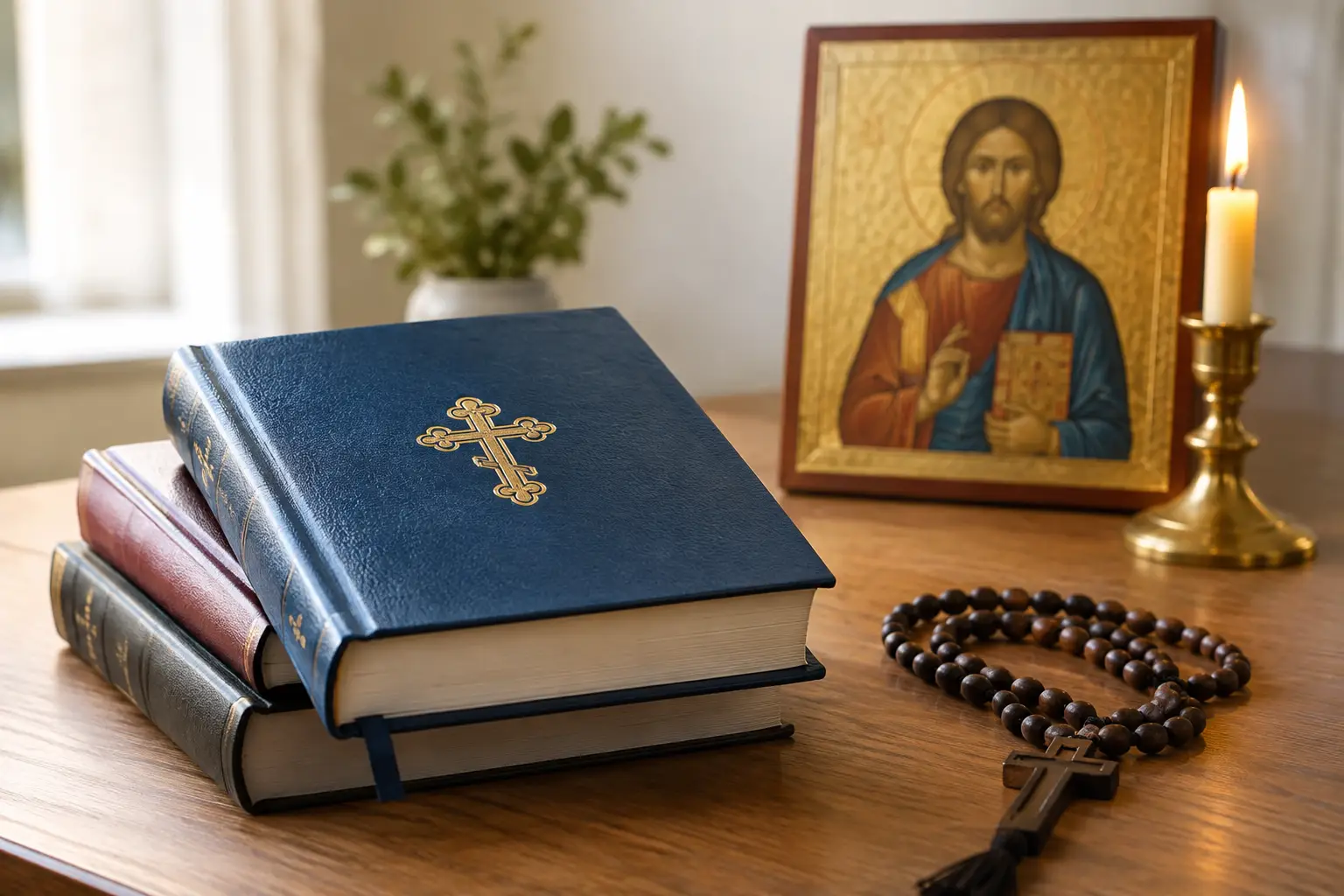
A first prayer book should not feel like a test of endurance. It should become a familiar, reverent companion at the icon corner: a book you can open before work, at the close of day, or in a moment of need. The best prayer books for beginners make the Church’s prayer approachable without thinning its sacred language, order, or theological depth.
For an Orthodox Christian, a prayer book is more than a collection of inspiring words. It gathers prayers received through Holy Tradition: prayers to the Holy Trinity, the Most Holy Theotokos, the Guardian Angel, the saints, and prayers for repentance, healing, travel, family, and the departed. A good first volume helps a person enter the rhythm of Orthodox prayer with humility and steadiness.
What a Beginner Orthodox Prayer Book Should Include
The most useful first choice is usually a complete Orthodox prayer book in English, or in English with Church Slavonic or Russian alongside it. Look first for the daily prayers: morning prayers, evening prayers, the Trisagion prayers, the Creed, the Lord’s Prayer, Psalm 50, and prayers before and after Holy Communion. These form a sound foundation for prayer at home.
It is also helpful when a book includes canons, akathists, a preparation for confession, prayers for the living and departed, and selected Psalms. A beginner may not use every section at once. That is entirely normal. The value of a fuller volume is that it can remain with you as your prayer rule grows under the guidance of your priest.
A small book containing only morning and evening prayers can be a wise choice for someone who is easily overwhelmed. Yet a more complete prayer book often serves better over time, especially for a family prayer corner. The right decision depends on whether you need a simple daily starting point or one book that can accompany years of Orthodox life.
The Orthodox Prayer Book: The Best Place to Begin
For most newcomers, a traditional Orthodox prayer book with the established morning and evening offices is the best first purchase. It teaches the heart to pray with the Church rather than only according to changing feelings. Some days, you may read the complete rule. On other days, especially during illness, travel, work demands, or family responsibilities, you may read a shorter portion with attention and repentance.
Do not measure early progress by the number of pages completed. Prayer is not a performance. Read clearly, stand when you are able, make the sign of the Cross with reverence, and keep your attention returning to the words. Even a brief rule prayed faithfully is more beneficial than a long rule rushed through with distraction.
A prayer book also teaches the language of repentance. Orthodox prayers frequently speak of sin, mercy, vigilance, and the fear of God. For a beginner, this language can sound severe at first. Read it in the light of the Gospel. These prayers do not invite despair. They bring us honestly before Christ, who is “merciful and the Lover of mankind.”
English Only or Bilingual?
Choose the language in which you can pray attentively. For many American Orthodox Christians, that will be English. A clear English translation allows the meaning to enter the mind and heart, especially when establishing a daily habit.
A bilingual English and Church Slavonic or Russian prayer book may be especially meaningful for families preserving a Slavic Orthodox inheritance. It allows parents and grandparents to pray in the language they received while helping younger family members understand the prayers in English. Such editions are also beautiful gifts for godchildren, newly married couples, and those returning to the Faith.
Still, bilingual pages can feel visually crowded to a new reader. If the second language causes hesitation rather than devotion, begin with English. Church Slavonic and Russian can be added gradually through familiar prayers such as the Lord’s Prayer, the Creed, or “O Heavenly King.”
Prayer Books for Specific Needs
After acquiring a daily prayer book, many believers find that one additional devotional volume helps them pray more personally through the seasons of life.
A Psalter is among the most precious companions for Orthodox prayer. The Psalms give voice to grief, gratitude, fear, repentance, and praise. They are prayed throughout the Church’s services and have sustained Christians in sorrow and trial for centuries. A beginner need not start by reading an entire kathisma. One Psalm prayed slowly can be enough.
An akathist book is another fitting choice. Akathists are hymns of praise and supplication, often addressed to the Savior, the Theotokos, the Guardian Angel, or a beloved saint. An Akathist to St. Nicholas the Wonderworker may be dear to a family seeking help and protection. An Akathist to St. Spyridon may be chosen in times of hardship. An Akathist to the Most Holy Theotokos brings the believer beneath her maternal intercession.
A book of prayers before confession is especially useful for adults entering the Church or returning after a long absence. It should support, not replace, honest preparation with a priest. Write nothing into your conscience that does not belong there, and do not turn confession into a private self-examination without pastoral guidance. The purpose is reconciliation with Christ and His Church.
For a household, a prayer book that includes prayers for children, spouses, parents, travelers, the sick, and the departed can become part of family life. A child who hears a parent pray for a grandparent, a friend in the hospital, or someone who has fallen asleep in the Lord learns that prayer is an act of love, not merely a private custom.
How to Choose a Prayer Book You Will Actually Use
The finest binding cannot help if a book remains closed. Choose a format that suits your real life. A large hardcover volume is dignified and lasting for an icon corner. A smaller hardcover or flexible edition is easier to keep by the bedside, carry while traveling, or give to a college student living away from home.
Print size matters more than many buyers expect. Tiny type may make a compact book attractive, but it can discourage older readers or anyone praying in low morning light. A ribbon marker, durable cover, and well-spaced pages are simple details that encourage daily use.
Consider the source and character of the edition as well. Orthodox prayer books should reflect the faith, worship, and spiritual vocabulary of the Church. Monastery-made and traditionally prepared books carry a particular dignity, joining craftsmanship with a living inheritance of prayer. A beautifully made volume may also become a lasting heirloom, passed from parent to child beside an icon, cross, or prayer rope.
If the book is intended as a gift, choose one appropriate to the recipient’s stage of life. A newly baptized Orthodox Christian may need a clear English prayer book before receiving specialized devotional texts. A godparent may appreciate a more substantial edition with prayers for Communion and confession. For a family, a bilingual prayer book can honor both faith and heritage.
Begin With a Small, Faithful Rule
When a new prayer book arrives, resist the temptation to begin with every prayer it contains. Place it at your icon corner, light a beeswax candle if you are able, and begin simply. Make the sign of the Cross. Read the Trisagion prayers, the Lord’s Prayer, Psalm 50, and a short prayer to your Guardian Angel. In the evening, offer thanksgiving for the day and ask forgiveness for your sins.
As this becomes steady, add the morning or evening prayers from the book. Your priest can help establish a rule suited to your health, work, children, and spiritual condition. Orthodox life is not built by copying another person’s rule. It is built through obedience, repentance, and perseverance.
Prayer books are not meant to replace spontaneous prayer. Bring your own needs before God: the name of a sick friend, a troubled child, a departed parent, an upcoming journey, or the burden you cannot explain. The written prayers of the Church teach us how to ask, give thanks, and entrust all things to the mercy of Christ.
A worthy first prayer book will not demand that you become an expert before you open it. It will quietly invite you to stand before God again tomorrow, beneath the gaze of the Savior and His saints, with the simple words: “Lord, have mercy.”


