What Is Akathist? An Orthodox Prayer Hymn
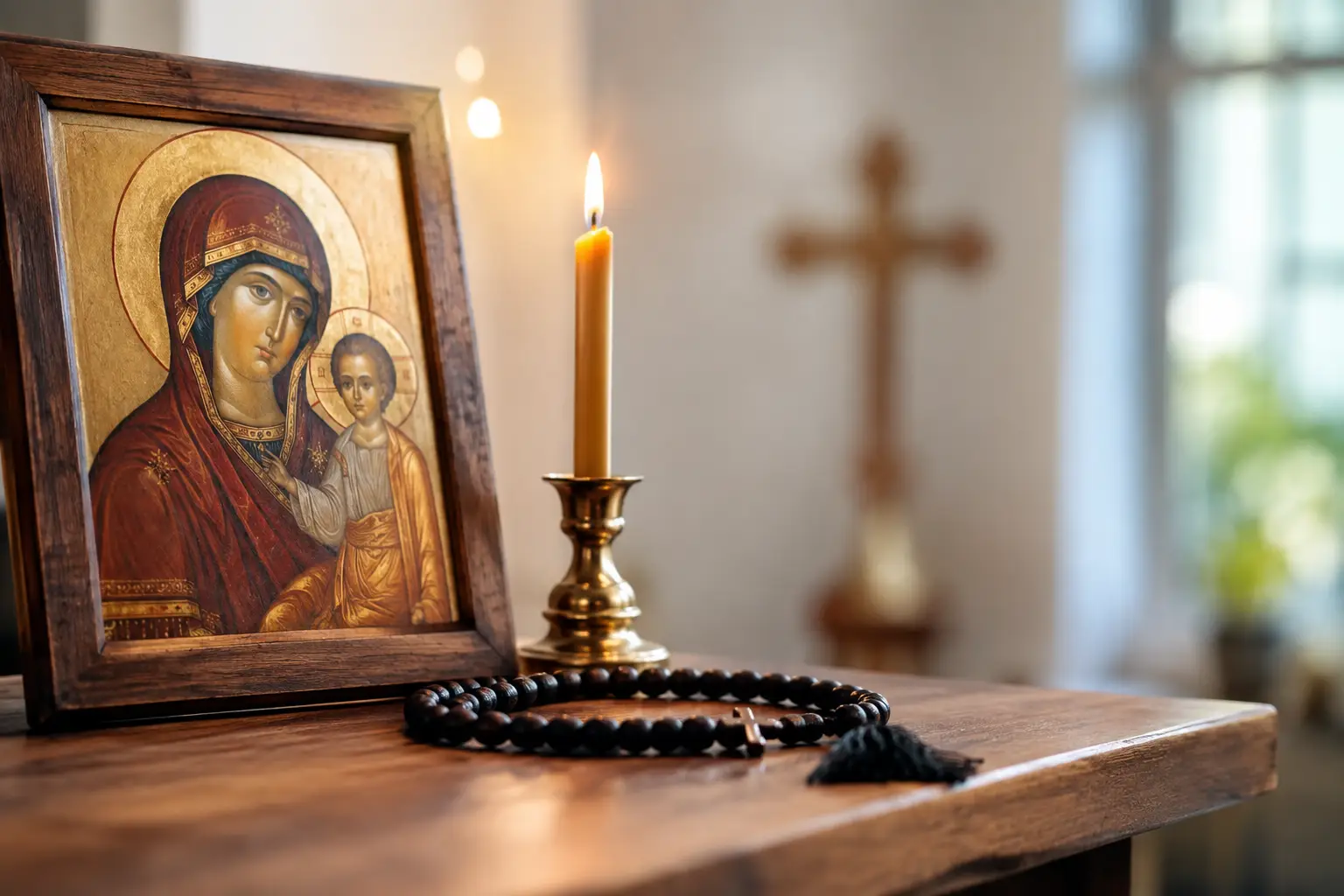
At a vigil service, in a quiet prayer corner before an icon, or in the pages of a monastery prayer book, a faithful Christian may encounter the question: what is akathist? An akathist is a hymn of praise and supplication in the Orthodox Church, offered to the Lord Jesus Christ, the Most Holy Theotokos, a saint, or a sacred mystery of the faith. Its words do not merely tell a holy story. They teach the heart to stand before God with thanksgiving, repentance, wonder, and hope.
The name comes from the Greek word akathistos, meaning “not sitting.” Traditionally, the hymn is prayed while standing, as an outward expression of attentiveness and reverence. Yet Orthodox prayer is not a test of physical strength. An elderly person, someone who is ill, or a parent caring for a child may sit when necessary. The essential offering is a humble and watchful heart.
What Is an Akathist in Orthodox Prayer?
An akathist follows a poetic structure of kontakia and oikoi. The kontakia are shorter hymns that announce the spiritual theme, while the oikoi are longer verses that unfold it through praise, Scripture, and petitions. Many oikoi include repeated salutations beginning with “Rejoice,” known in Greek as chairetismoi. These joyful invocations are among the most recognizable features of an akathist.
The original and greatest example is the Akathist Hymn to the Most Holy Theotokos. It proclaims the mystery of the Incarnation: the eternal Son of God took flesh from the Virgin Mary for the salvation of the world. When the faithful sing, “Rejoice, O Unwedded Bride,” they honor her not as a distant figure from sacred history, but as the Mother of God who continually intercedes for those who call upon her with faith.
Over time, Orthodox Christians composed other akathists in this form. There are akathists to Christ, to the Life-Giving Cross, to the Guardian Angel, and to beloved saints such as Saint Nicholas the Wonderworker, Saint George, Saint Spyridon, and Saint Seraphim of Sarov. There are also hymns before revered icons of the Theotokos, especially icons connected with a history of healing, protection, or deliverance.
An akathist is therefore more than a devotional poem. It belongs to the living prayer of the Church. Its language is richly biblical, shaped by the feast days, saints, and worship of Orthodox tradition.
The Akathist Hymn and Its Place in Church Life
The Akathist Hymn to the Theotokos holds a special place during Great Lent. In many Orthodox churches, portions are sung on the first four Fridays of Lent, and the complete hymn is served on the fifth Saturday, commonly called the Saturday of the Akathist. This service recalls the protection of Constantinople through the prayers of the Mother of God and gives the faithful a bright hymn of praise amid the solemn labor of the Fast.
Other akathists may be served in church on a saint’s feast day, during a parish prayer service, or at times of special need. A community may pray an akathist before an icon when asking for God’s mercy in illness, travel, family troubles, or a difficult decision. The purpose is never to obtain a result by formulas or to treat prayer as a spiritual transaction. Orthodox Christians ask for help while entrusting themselves to the wisdom and will of God.
This distinction matters. The saints are not separate sources of power, and an icon is not an object of superstition. Veneration passes to the person depicted. Before an icon of Saint Nicholas, for example, the faithful ask the saint to pray for them before the throne of God. Before an icon of the Savior, they worship Christ Himself. An akathist gives words and order to this prayerful relationship.
How an Akathist Is Usually Prayed at Home
A home akathist can be a beautiful part of a family’s prayer rule, especially on a saint’s feast day or during a season of sorrow and petition. It is best approached with peace rather than haste. A small prayer corner with an icon, a cross, and a beeswax candle can help gather the mind, but the outward setting should serve prayer rather than become a distraction.
Many prayer books print introductory prayers before the akathist, followed by the hymn itself and closing prayers. If your priest has given you a prayer rule, follow his guidance. If you are new to Orthodox practice, it is wise to begin simply. Praying one akathist carefully once a week may be more fruitful than attempting a long rule that soon becomes burdensome.
A customary home practice may include the Trisagion prayers and Psalm 50, then the akathist appointed for the day or need. The exact order varies among prayer books and jurisdictions. Some editions include troparia, a kontakion, or a prayer to the saint at the end. This is not a problem. The Church has received related devotional customs in different lands, and a faithful person need not become anxious over minor variations.
Read slowly enough to hear the meaning. The repeated “Rejoice” is not empty repetition. Each phrase names a facet of God’s grace: the saint’s faithfulness, the Theotokos’ obedience, Christ’s victory over death, or the mercy given to those who repent. When a line strikes the conscience, pause briefly. Let it become your own prayer.
Choosing an Akathist for a Particular Need
It is natural to seek the prayers of a saint whose life speaks directly to one’s circumstances. A traveler may turn to Saint Nicholas. A soldier or someone facing danger may pray to Saint George. A person burdened by financial difficulty may ask the intercessions of Saint Spyridon. Those seeking protection and guidance often pray to their Guardian Angel or before an icon of the Theotokos.
Still, the best choice is not always the most narrowly matched request. Sometimes an akathist to Christ, the Sweetest Jesus, brings the heart back to the true center of every petition. Sometimes the Akathist to the Theotokos is the right prayer because grief, gratitude, and fear all need to be placed beneath her maternal intercession. And sometimes the priest who knows a person’s spiritual life can recommend a better path than a list of associations.
When selecting an akathist book, clarity and faithfulness to Orthodox tradition matter. A well-made prayer book with readable type can become a lasting companion in the home, particularly when kept near the family icons. At Andija, Orthodox prayer books, icons, crosses, and monastery-made devotional articles are chosen to support this same reverent life of prayer and remembrance.
Standing, Singing, and Praying With Attention
The word “not sitting” can sound strict, but it points toward the posture of the soul. Standing for an akathist recalls the vigilance of the wise virgins waiting for the Bridegroom. It is a small bodily confession that God is present and that prayer deserves our full attention.
Yet mercy is always greater than outward form. If pain, fatigue, pregnancy, age, or illness makes standing difficult, sit without guilt. If the full akathist is too long, pray a portion with care. If the words feel unfamiliar, continue patiently. The poetry of Orthodox worship often enters the heart gradually, like incense filling a room.
Singing is also welcome when possible. Even a simple reading voice can carry the hymn with warmth and dignity. In a family setting, one person may lead while others respond with “Alleluia” or the repeated refrains. There is no need for performance. The beauty of the akathist lies in offering praise together.
A Prayer That Forms the Heart
An akathist does not replace the Divine Liturgy, confession, fasting, or the daily prayers received from the Church. It is a devotional help, not a private alternative to the sacramental life. Its value is found precisely in the way it leads the believer back toward worship, repentance, and love of God.
Prayed faithfully, an akathist teaches the tongue to bless rather than complain. It teaches the mind to remember God’s works. It places personal needs within the larger life of the Church, where the Theotokos, angels, martyrs, hierarchs, and righteous ones stand in prayer before the Lord.
Choose an akathist that draws you toward Christ, light a candle if you are able, stand or sit with humility, and begin with the words you have. The saints do not ask for perfect eloquence. They ask us to turn our hearts toward God and to remain there in faith.


