Orthodox Prayer Bracelets and the Jesus Prayer
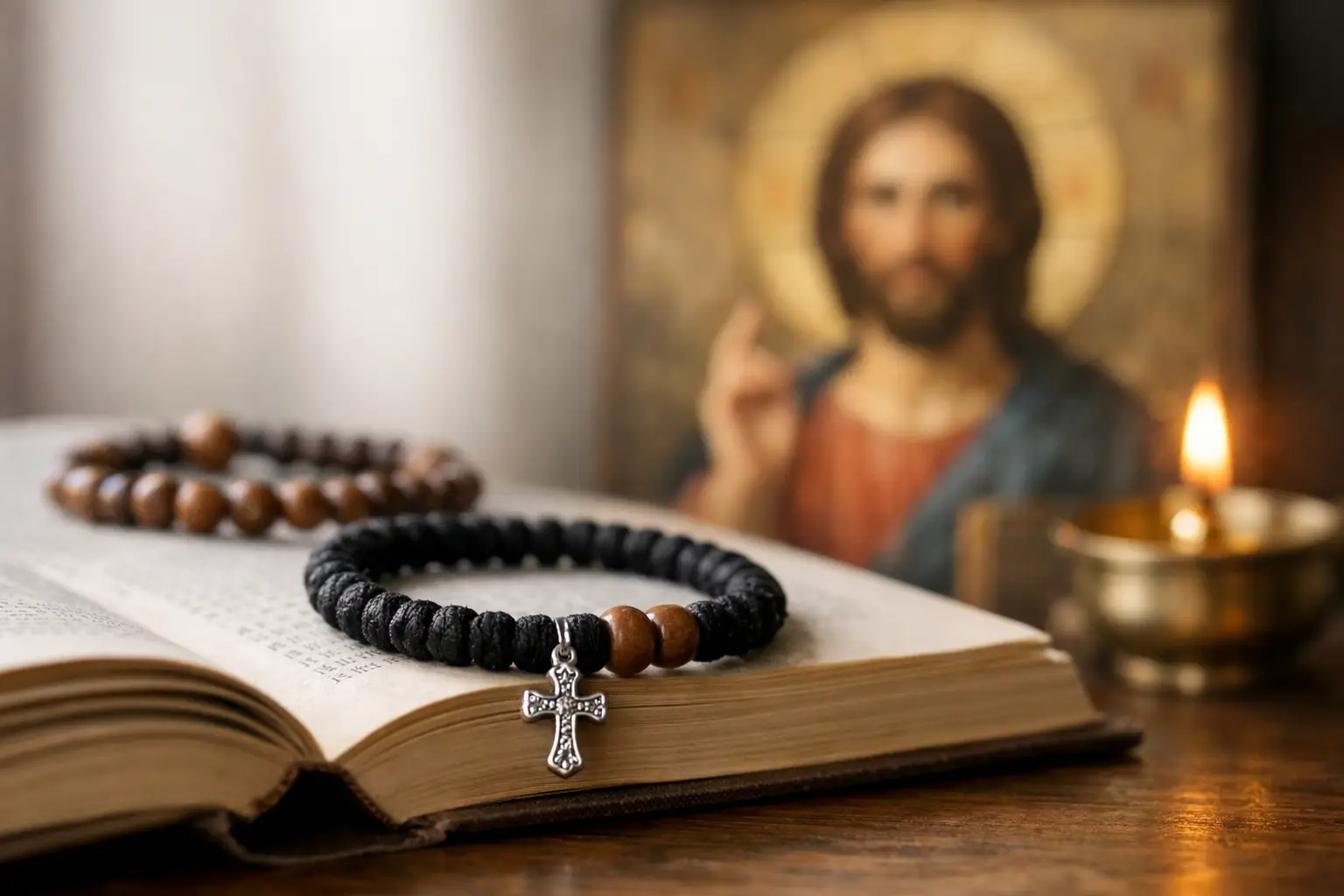
A small prayer rope around the wrist can be a quiet reminder in the middle of a crowded day: return to Christ. Orthodox prayer bracelets are not fashion accessories in the ordinary sense, though many are carefully handmade and beautiful. They are compact prayer ropes, made to help the faithful keep the Jesus Prayer close at hand: “Lord Jesus Christ, Son of God, have mercy on me, a sinner.”
Known in different Orthodox traditions as chotki, komboskini, broyanitsa, or prayer ropes, these devotional companions carry a long monastic heritage into daily life. A person may use one while standing before icons, traveling to work, waiting at a doctor’s office, or settling the mind before sleep. Its purpose is simple and profound: not to count spiritual achievement, but to gather the heart before God.
What Orthodox Prayer Bracelets Are Meant to Do
An Orthodox prayer bracelet is usually a short loop of knotted cord, sized for the wrist and commonly made with 33, 50, or another modest number of knots. Each knot gives the fingers a place to rest while the lips or heart repeat a prayer. The most familiar prayer is the Jesus Prayer, but a person may also pray, “Most Holy Theotokos, save us,” ask the intercessions of a beloved saint, or offer a brief prayer for someone in need.
The bracelet form is especially useful because it is discreet. A larger prayer rope may be kept in a pocket or prayer corner, while a wrist prayer rope remains available throughout the day. It can gently interrupt distraction without calling attention to the person wearing it.
Yet the rope itself does not work like a charm. Orthodox Christians do not wear it for luck, protection apart from God, or as a sign of spiritual status. The knots have value because they serve prayer. When used with humility, repentance, and faith, a prayer bracelet becomes a practical aid to the life of the Church.
The Meaning of the Knots and Materials
Traditional Orthodox prayer ropes are often made from black wool, recalling mourning for sin and the call to repentance. In monastic practice, wool also speaks of Christ the Good Shepherd and of the flock He gathers. But prayer bracelets may also be made with durable cord, wood beads, stone beads, or silver accents. Materials can vary by local custom, maker, and intended use.
The traditional knotted prayer rope has a special place because every knot is formed in a pattern associated with the Cross. Many ropes include a small cross and, sometimes, a tassel. The tassel is traditionally understood as a reminder to wipe away tears of repentance, though not every bracelet includes one. A bead may mark a division in a longer rope, helping the person know where they are without making prayer mechanical.
A handmade bracelet made in a monastery or by an Orthodox artisan can be a particularly meaningful choice. Its value is not merely in workmanship, although careful workmanship matters. It also reflects a living inheritance of prayer, labor, and reverence. For a gift, a well-made prayer rope presented in a proper gift case can mark a name day, baptism, feast day, graduation, or a season when someone needs spiritual encouragement.
How Many Knots Should a Prayer Bracelet Have?
There is no single number required for every Orthodox Christian. Thirty-three knots are often chosen in remembrance of the earthly years of our Lord Jesus Christ. Fifty knots provide a slightly longer rule without the size of a full prayer rope. Larger counts such as 100 are common for pocket or hand-held ropes and are often used with a prayer rule given by a priest or spiritual father.
The right number depends on how the bracelet will be used. A simple 33-knot wrist rope is often suitable for daily remembrance. A person following a more regular rule may prefer a longer rope. The count is an aid, not a measure of holiness. Better a few prayers offered with attention than many said while the mind is entirely elsewhere.
How to Use an Orthodox Prayer Bracelet
Begin without strain. Make the sign of the Cross, hold the first knot between the fingers, and say the Jesus Prayer slowly. Move to the next knot and repeat. If praying aloud is not possible, say the words inwardly. The goal is not a special feeling. It is to stand honestly before the Lord and ask for His mercy.
A simple beginning may be one circuit of the bracelet in the morning or evening. Some people pray a few knots before opening a difficult message, beginning a journey, or entering a conversation that requires patience. Others use the rope while reading Scripture or sitting quietly before an icon of Christ, the Theotokos, or their patron saint.
If distractions arise, do not become discouraged. Notice them and return to the prayer. This return is itself part of the work. The Jesus Prayer is not a technique for emptying the mind. It is the repeated calling upon the Name of Jesus Christ with faith and repentance.
Those who want to take on a larger prayer rule should seek the guidance of their parish priest or spiritual father. The Church gives this counsel for good reason. Prayer needs discernment. What strengthens one person may burden another, especially during illness, grief, family demands, or a difficult spiritual season.
A Reverent Choice for Daily Wear
Because a prayer bracelet rests against the skin and is handled often, construction matters. Look for secure knots, durable cord, a comfortable fit, and a cross that is firmly attached. Natural wool has traditional significance but may not suit every wearer. Strong cord can be practical for work, travel, and daily movement. Beaded styles may appeal to those who prefer a more jewelry-like appearance, but the beads should still be easy to move deliberately during prayer.
For a child or teenager, a smaller and simpler bracelet is usually best. It can introduce the habit of turning to Christ without making prayer feel like a task to be completed. For an adult receiving a prayer bracelet as a gift, consider their tradition and daily circumstances. A black knotted rope may be especially fitting for someone who values a monastic appearance, while a silver-accented or carefully beaded prayer rope can suit a feast-day gift or a more formal occasion.
If an item has been blessed, receive that blessing with reverence. A blessing does not change the bracelet into an object of superstition. It sets it apart for faithful use and reminds the wearer that all prayer belongs within the sacramental life of the Church. Treat the rope respectfully, rather than tossing it among ordinary belongings or wearing it carelessly as decoration.
Prayer, Not Display
Orthodox prayer bracelets may be visible, especially when worn on the wrist, but they should not become a display of piety. The Lord teaches us to pray with sincerity, not for the praise of others. If a bracelet invites a respectful question, it can be an occasion to speak simply about the Jesus Prayer. If it attracts attention that disturbs prayer or feels immodest, it may be better worn beneath a sleeve or kept in a pocket.
This balance matters when choosing designs with precious metals, carved beads, or ornate crosses. Fine materials and artisan beauty can honor sacred tradition and make a worthy gift. Orthodox art has never rejected beauty when it points beyond itself toward God. Still, the finest bracelet is the one that is actually used in prayer, with a contrite heart.
Caring for a Prayer Rope
Keep a prayer bracelet clean and dry when possible, particularly if it is made of wool or natural fibers. Avoid pulling the knots roughly or exposing delicate cords to water, chemicals, and sharp edges. If a knot loosens or the rope breaks after long use, do not treat it as an omen. It has simply served faithfully and may need repair or replacement.
Some faithful keep an older, worn prayer rope near their icons rather than discarding it casually. The important thing is reverence, not anxiety over a particular custom. When uncertain, ask a priest how devotional items are handled in your parish tradition.
A prayer bracelet cannot remove sorrow, solve every decision, or replace participation in the Divine Liturgy, confession, Scripture, and works of mercy. What it can do is place a humble prayer in the hand. Each knot offers the same invitation: call upon the Name of Christ, ask for mercy, and let that prayer quietly accompany the next faithful step.


