How to Bless Home Icons in Orthodox Tradition
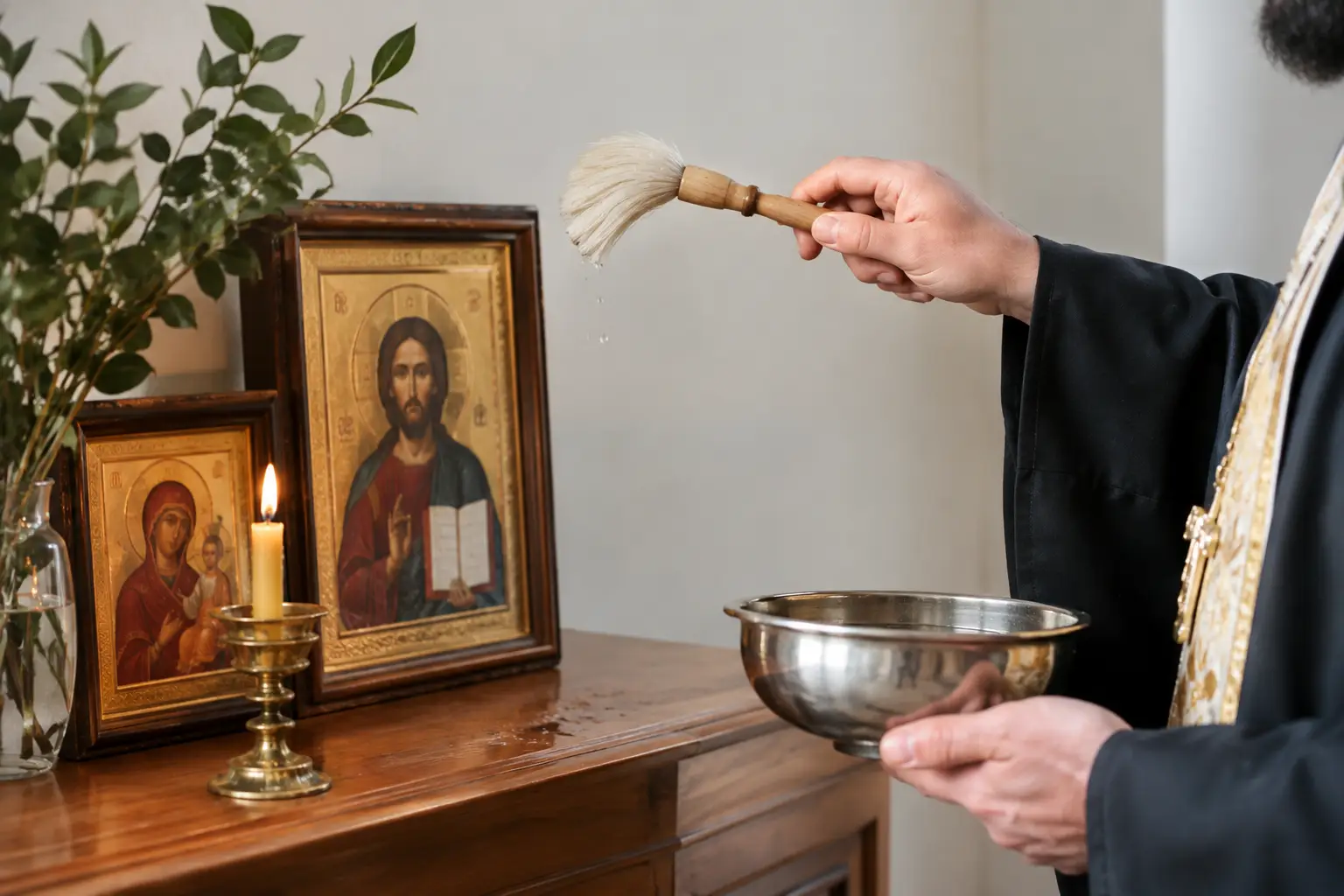
An icon is not simply religious artwork placed on a wall. It is a holy image before which Orthodox Christians stand in prayer, honoring Christ, His Most Pure Mother, the angels, and the saints depicted. For those asking how to bless home icons, the first principle is simple: receive and keep them with reverence, and seek the Church’s blessing rather than treating the act as a private ceremony.
A prayer corner may be modest – perhaps an icon of Christ, the Theotokos, and a patron saint – yet it can become the quiet spiritual center of a household. Before it, families make the sign of the Cross, light a beeswax candle or lampada, read the morning and evening prayers, and bring both sorrow and thanksgiving before God.
What It Means to Bless an Icon
In Orthodox life, a blessing is not merely a good wish spoken over an object. It is the Church’s prayer that an item be set apart for a sacred use. When a priest blesses an icon, he asks God to sanctify it for the prayerful veneration of the faithful, so that those who stand before it may be strengthened in faith and receive spiritual help.
The honor offered to an icon does not stop at wood, paint, silver, or a finely made case. As the Church teaches, honor passes to the person represented. When we kiss an icon of Christ, we worship Christ alone. When we venerate the Theotokos or a saint, we honor the one portrayed and ask for his or her prayers.
There are differences of custom among Orthodox jurisdictions. Some canonical icons are blessed as part of their making or before they are offered for sale. In other parishes, priests commonly bless every newly acquired icon brought to them by the faithful. For this reason, it is wise not to assume. Ask your parish priest whether your particular icon should be blessed and follow his pastoral guidance.
How to Bless Home Icons Through the Church
The proper and customary way to have an icon blessed is to ask an Orthodox priest. Do not feel embarrassed about making the request. Priests regularly bless crosses, icons, prayer books, homes, vehicles, and other items used by faithful Orthodox Christians.
Before bringing the icon to church, remove any retail wrapping and make sure it is clean and respectfully handled. If it comes with a protective box or gift case, carry it securely, but present the icon itself to the priest if he asks. A silver-plated icon, a hand-painted wooden icon, and a printed color icon may all be treated reverently. Precious materials add beauty and honor, but the sacred purpose of the image is not measured by its price.
It is often best to contact the parish office or priest beforehand, especially on a Sunday or great feast when he may be occupied with services and parishioners. He may bless the icon after the Divine Liturgy, at another scheduled time, or as part of a visit to bless your home. The service is brief, but it should never be rushed in spirit.
A priest may use holy water and the prayers appointed for the blessing of icons. He may also speak with you about the image itself, particularly if it is unusual, damaged, or of uncertain origin. This is a pastoral kindness, not a test. Orthodox iconography follows sacred tradition because an icon proclaims the truth of the Incarnation and the faith of the Church.
Can You Bless an Icon Yourself?
A layperson should not perform the priestly rite of blessing an icon. Orthodox Christians may pray before a new icon, make the sign of the Cross, and place it in the prayer corner with devotion. They may also ask God to make their home a place of peace, repentance, and prayer. Yet this is different from the formal blessing given by a priest.
If you have holy water from your parish, do not treat it as a substitute for the Church’s rite or use it casually. Customs differ, and your priest can tell you how holy water is used in your parish and home. The humble response is always the safest one: pray, preserve the icon with honor, and ask for a blessing when possible.
Preparing a Worthy Place for Blessed Icons
After an icon has been blessed, prepare a clean and peaceful place for it. Traditionally, Orthodox homes keep icons in an eastern corner when the layout allows, since Christians face east in prayer as a sign of awaiting Christ’s coming. This is a cherished custom, not a burden. In apartments, shared homes, and rooms with difficult layouts, choose the most fitting available place.
Avoid treating the prayer corner as a decorative shelf. Icons should not be mixed carelessly with ordinary ornaments, casual photographs, or objects that distract from prayer. A small shelf, an icon case, or a clean wall space can be enough. Many families keep a prayer book, a hand cross, a censer if they use one with their priest’s blessing, and beeswax candles nearby.
Be thoughtful about practical care as well. Keep icons away from dampness, direct sunlight, cooking grease, and places where they can easily fall. Do not place a candle beneath a shelf, close to curtains, or where children and pets may knock it over. A lampada or candle before an icon is a beautiful offering, but fire safety belongs to responsible Christian stewardship.
If an icon is a wedding, baptism, name-day, or housewarming gift, include its spiritual purpose when you give it. A gift case and refined workmanship make an icon suitable for a meaningful occasion, but the greater gift is an invitation to prayer. An icon of the Savior may be given for a new home; an icon of the Theotokos may comfort a family; a patron saint or Guardian Angel icon can accompany a child or godchild through the years.
Blessing the Home Is Not the Same as Blessing Icons
A common source of confusion is the difference between blessing an icon and blessing a home. Both are sacred acts, but they serve related yet distinct purposes. An icon is blessed for prayerful veneration. A home blessing asks God to protect and sanctify the people who live there, bringing the grace of Christ into each room and into the daily life of the household.
Many Orthodox parishes bless homes around Theophany, when holy water is distributed in remembrance of Christ’s Baptism in the Jordan. You may also ask your priest to bless a new home after moving in. During the visit, the priest may sprinkle holy water, offer prayers, and bless the household. Having your icons already placed in the prayer corner creates a fitting place for the family to gather during this visit.
If a home has not yet been blessed, do not delay your prayers until every detail is arranged. Begin with what you have. Stand before your icons, light a candle safely if desired, and pray the Trisagion prayers, the Lord’s Prayer, or a simple prayer from the heart. The prayer corner becomes living and fruitful through faithful use, not through perfect decoration.
When an Icon Needs Special Pastoral Attention
Speak with a priest if you are uncertain whether an image is suitable for Orthodox veneration. This may happen with mass-produced pictures that use unfamiliar imagery, icons altered into secular décor, or old items whose history is unknown. A priest can help distinguish between a canonical icon, a devotional image that may be kept respectfully, and an item that should not be used in the prayer corner.
Damaged icons also deserve care. Do not throw them away with household trash. Ask your parish priest how to handle a broken, severely worn, or water-damaged icon. In many Orthodox communities, such sacred objects are respectfully burned or buried, but the appropriate practice should be guided by the Church.
For a newly purchased icon, choose one that will draw the heart toward prayer. The image may be handmade, made in a monastery, protected by fine silver 999 plating, or presented in a gift-ready case. These qualities can reflect loving craftsmanship and honor for the holy image. Still, the best icon for a home is the one before which its people will return, day after day, to say: “As for me and my house, we will serve the Lord.”
Let your blessed icons remain more than a beautiful inheritance of Orthodox culture. Let them call the household to silence, forgiveness, prayer, and remembrance of God – especially on ordinary days, when a quiet candle before the Savior may become the beginning of peace.


