Traditional Orthodox Home Altar Items Guide
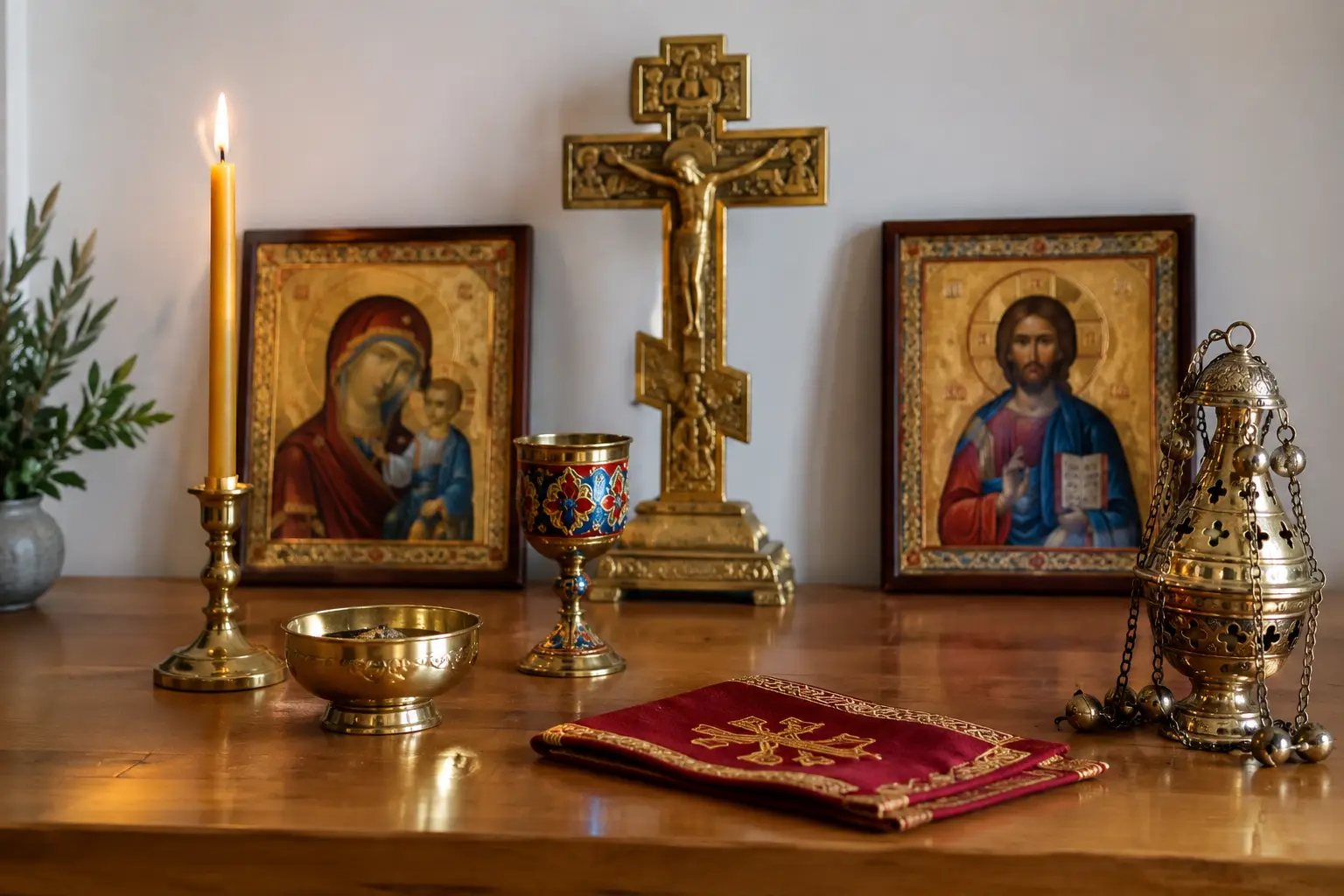
A quiet corner before an icon can become the most prayerful place in a home. Here, a family begins the day with the sign of the Cross, remembers those in need, gives thanks after a meal, and keeps the feasts of the Church close. Traditional Orthodox home altar items are not chosen to create a religious display. They are gathered so that prayer may have a faithful, visible place within daily life.
In Orthodox homes, this place is often called the icon corner or red corner. The old Slavic meaning of “red” also carries the sense of beautiful or honored. Whether it is a full wall arrangement, a small shelf in an apartment, or a modest space beside a bed, its dignity comes from the prayer offered there.
The Meaning of an Orthodox Prayer Corner
Strictly speaking, the altar is the holy table in the sanctuary, consecrated for the Divine Liturgy. A home prayer corner is not a church altar and should not imitate the sanctuary. It is a domestic place of devotion, centered on holy icons and ordered with humility.
Many Orthodox Christians place the icon corner on an eastern wall when their home permits it, following the ancient Christian custom of facing east in prayer. Yet this is a helpful tradition, not a burden. In a small home, the best location is one that can be kept clean, treated reverently, and used consistently. Avoid placing icons where they will be treated casually or set among unrelated clutter.
The purpose is not to acquire many objects at once. A single canonical icon, a prayer book, and a candleholder may serve a believer more deeply than an elaborate arrangement that is rarely used. Begin with what supports prayer, then add meaningful articles over time.
Essential Traditional Orthodox Home Altar Items
Icons of Christ and the Theotokos
The foundation of the prayer corner is an icon of Our Lord Jesus Christ and an icon of the Most Holy Theotokos. These are commonly placed together, with Christ on the right as one faces the icons and the Mother of God on the left. This customary arrangement reflects the Church’s reverence for Christ and the intercession of His Mother.
Choose icons made according to Orthodox tradition, with recognizable and canonical imagery. A finely made color icon, a silver-plated icon with fine silver 999, or an icon in a protective case can all be fitting choices. Material and workmanship matter because an icon is treated with honor, but prayer does not depend on cost. A modest printed icon, kept clean and reverently displayed, is also worthy of veneration.
Families often add an icon of their patron saint, Guardian Angel, or a saint especially beloved in the household. Saint Nicholas the Wonderworker is cherished for his pastoral care and help in need. Saint George is often chosen as a witness to courageous faith, while Saint Spyridon is invoked with particular love by those seeking his intercessions in difficult circumstances.
A Cross for Prayer and Remembrance
An Orthodox cross belongs naturally in the prayer corner. It may be a wall cross, a standing crucifix, or a carefully displayed baptismal or family cross. The cross reminds the household that every prayer is offered through Christ’s saving sacrifice and Resurrection.
Russian Orthodox crosses with their distinctive slanted lower bar are especially meaningful to many Slavic and diaspora families. A handmade silver cross, a wooden cross, or a cross blessed in a church can become a treasured family article. If a cross is worn as devotional jewelry, it should not be confused with an icon-corner cross, though both direct the heart toward Christ.
Beeswax Candles and a Safe Candleholder
Lighting a candle before an icon is a simple offering of prayer. The flame expresses watchfulness, repentance, thanksgiving, and the desire that the light of Christ may dwell in the home. Natural beeswax candles are especially valued for their warm light and traditional use in Orthodox worship.
A stable, nonflammable candleholder is essential. Candles should never be left unattended, especially in homes with children, pets, curtains, or low shelves. When an open flame is not practical, a lampada may be used only with proper care, or one may simply pray without a lighted candle. The grace of prayer is not diminished by circumstance.
Prayer Books, Scripture, and a Prayer Rope
A prayer book gives the household words received from the Church: morning and evening prayers, prayers before and after meals, prayers for the departed, and hymns for feast days. Holy Scripture, especially the Gospel book and Psalter, also belongs naturally near the icons.
A prayer rope may rest there as well. It is not an ornament or a charm. Used with attention, it helps the faithful repeat the Jesus Prayer: “Lord Jesus Christ, Son of God, have mercy on me, a sinner.” Those beginning a regular prayer rule should seek guidance from their priest or spiritual father, particularly if they intend to use a prayer rope for extended prayer.
Objects to Add With Care
As a home’s devotional life grows, it may be fitting to include a small censer, incense, a container for holy water, or a bottle of blessed oil received from a shrine or monastery. These articles can deepen the sense that the home is set apart for God, but they should be used with understanding rather than as religious decoration.
Incense requires special caution because of smoke, allergies, and fire safety. Holy water should be kept in a clean, respectful vessel, not stored carelessly among ordinary household items. Blessed bread, palms, pussy willows, and other church blessings should be handled according to local parish custom. When unsure, ask a priest rather than relying on family habit alone.
A home prayer corner does not require objects reserved for clergy or church services. The Holy Gifts, altar coverings, liturgical vessels, and items intended for the Divine Liturgy do not belong in private domestic use. Reverence includes knowing the proper place of sacred things.
How to Arrange the Prayer Corner
Keep the arrangement clear and uncluttered. Icons may be placed on a shelf, hung on the wall, or kept in an icon case that protects them from dust and damage. Avoid setting icons directly on the floor or placing unrelated household objects in front of them.
If there are several icons, place Christ and the Theotokos at the center of the arrangement, then position saints and feast icons around them. There is no need to turn the wall into a crowded collection. A smaller number of icons, chosen with love and venerated regularly, often creates a more peaceful place for prayer.
A clean cloth beneath the icons or a small embroidered covering may be appropriate, especially for a feast day or family prayer space. Choose fabrics and colors with restraint. The beauty of the corner should point beyond itself, toward the persons depicted in the icons and the life of the Church.
Choosing Items for a New Home or Gift
For a wedding, housewarming, baptism, or first apartment, an icon pair of Christ and the Theotokos is a deeply traditional gift. Add a small Orthodox cross, beeswax candles, and a prayer book, and the recipient has a meaningful beginning for a home prayer corner.
For a godchild or young family, a Guardian Angel icon or patron saint icon in a gift case can become a lifelong companion. For those who value heirloom workmanship, handmade icons, monastery-made prayer books, and silver-plated icon settings offer both devotional significance and enduring beauty. The best gift is not necessarily the largest or most expensive one. It is the one that invites real prayer and can remain with the family through the years.
Care, Veneration, and Daily Use
Treat icons with the same quiet respect given to sacred objects in church. Dust them gently with a soft, dry cloth, protect them from direct sunlight and excess humidity, and avoid harsh cleaners on painted surfaces or metal coverings. An icon case is particularly helpful for valuable icons and for homes where candles are used nearby.
Veneration is not worship of wood, paint, or silver. Orthodox Christians honor the person depicted, lifting heart and mind toward Christ, His Mother, and His saints. A kiss, a bow, the sign of the Cross, and a brief prayer are fitting acts of devotion.
Let the prayer corner remain a place to which the household returns, even on hurried mornings and difficult evenings. Before the icons, a few sincere words, a lighted beeswax candle when possible, and the humble prayer for mercy can keep the faith of the Church alive within the walls of the home.


