How to Create a Prayer Corner in Your Home
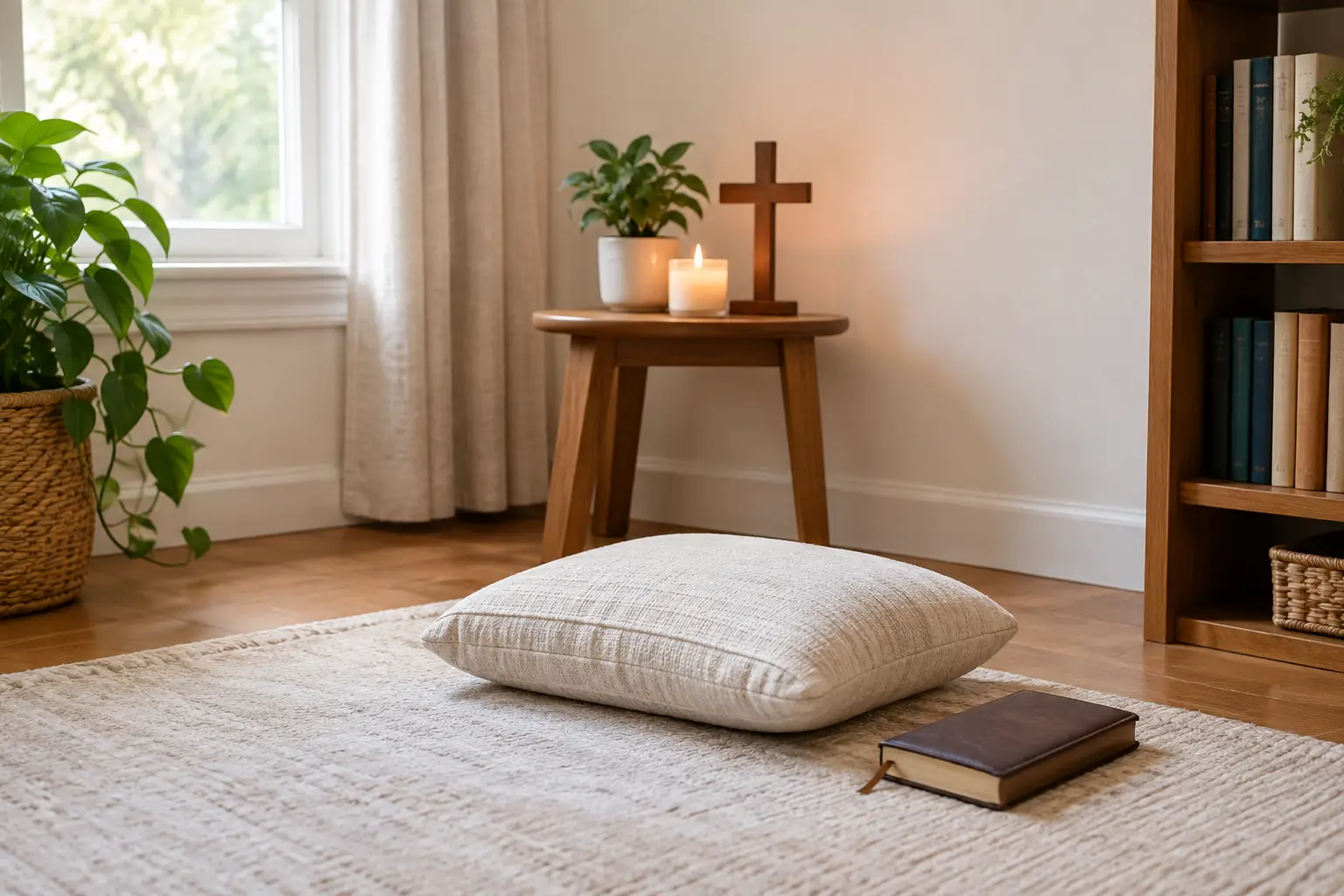
Before placing the first icon or lighting the first candle, remember what a prayer corner is for: not to decorate a room, but to set apart a small place where the heart may stand before God. Learning how to create a prayer corner begins with this intention. Even a modest corner in an apartment can become a faithful witness to Christ, a place for morning and evening prayers, thanksgiving, repentance, and the remembrance of those in need.
In Orthodox homes, this sacred place is often called the red corner, meaning the beautiful or honored corner. It gathers the household around the holy images of Christ, His Most Pure Mother, and the saints. Its beauty does not depend on size, price, or elaborate furnishings. Reverence, cleanliness, and a sincere rule of prayer matter most.
How to Create a Prayer Corner With Reverence
Choose a place that is quiet enough for prayer and easy to approach each day. Traditionally, Orthodox Christians place their icons on an eastern wall when possible, turning toward the rising sun as they pray. Yet many homes do not allow this arrangement. A clean wall, a small shelf, or the upper surface of a cabinet in a peaceful part of the home is suitable.
Avoid placing icons where they will be crowded by ordinary household clutter or treated as part of a decorative display. A prayer corner should not be beneath shelves holding unrelated objects, beside items that may fall, or in a place where it will be constantly disturbed. If the living room is the only practical space, choose a dignified area and keep it orderly.
A family may establish one principal prayer corner and also keep a small icon in a bedroom, nursery, or work area. The purpose is not to fill every wall with sacred images, but to give prayer a visible and faithful place in daily life.
Begin With Christ and the Theotokos
The foundation of an Orthodox prayer corner is an icon of our Lord Jesus Christ. Beside it, place an icon of the Most Holy Theotokos, who always leads the faithful to her Son. These two holy images are sufficient for a beginning prayer corner and keep its focus clear.
Choose canonical icons made with care and respect for Orthodox tradition. Whether the icon is hand-painted, printed in rich color, protected in an icon case, or adorned with fine silver 999 plating, its purpose is veneration, not display. We honor the person depicted in the icon, offering reverence to Christ, His Mother, and the saints, not worship to wood, paint, or metal.
Then add icons that belong to the life of your household. Many families include the patron saints of parents and children, a Guardian Angel icon, Saint Nicholas the Wonderworker, Saint George, Saint Spyridon, or a feast-day icon especially dear to them. Do not feel compelled to acquire many icons at once. A few well-chosen images, prayerfully received, often serve a home better than an overcrowded arrangement.
If you are uncertain about the proper selection or placement of icons, ask your parish priest. Local customs differ, especially among Greek, Russian, Serbian, Antiochian, and other Orthodox communities. The Church’s faith is one, while the practical form of a home prayer corner may reflect the life and heritage of the family.
Arrange the Sacred Objects Simply
Place the icons at eye level or slightly higher, where they may be approached without difficulty. A small wall shelf is useful because it protects the icons and creates room for a cross, candleholder, or prayer book. Keep the icon of Christ in the place of highest honor, with the Theotokos near Him.
A wall cross or a standing Orthodox cross may be placed above or near the icons. It recalls the saving Passion of the Lord and gives the corner its unmistakable center. A small hand cross can also be kept there for personal prayer.
A clean cloth beneath the icons or on the shelf may add dignity, particularly on feasts. Some households use a simple embroidered cloth handed down through the family. This is a worthy custom, but it is not a requirement. The sacred character of the space comes from the holy images and the prayer offered there, not from ornament alone.
Do not place secular photographs, souvenirs, or decorative statues among the icons. Family names and photographs may be remembered before God in prayer, but the icon corner itself should remain devoted to the Lord and His saints.
Add What Supports Daily Prayer
A prayer corner should serve an actual prayer life. Keep an Orthodox prayer book nearby, perhaps alongside the Holy Gospel, a Psalter, and a list of names for whom the household prays. Russian-language or English-language prayer books may both have a place in families preserving Slavic and Orthodox heritage across generations.
Beeswax candles are a traditional and fitting offering. Their warm flame calls the mind to the words of Christ: “I am the light of the world.” A candle may be lit for morning or evening prayer, before reading Scripture, or in remembrance of the living and departed. Use a stable candleholder, keep the flame away from fabrics and icons, and never leave a burning candle unattended. Where an open flame is not possible, pray without it rather than taking a risk.
A small censer and incense may also be used by those accustomed to this practice, especially on Sundays and feast days. Here again, simplicity is wise. Incense should assist prayer, not turn a home devotion into a performance. A bell, prayer rope, holy water vessel, or blessed oil may be kept nearby if these are part of your household’s received practice.
Let the Corner Shape a Rule of Prayer
The most beautiful prayer corner grows quiet and neglected if no one stands before it. Begin with a rule that can be kept. Make the sign of the cross in the morning, offer the Trisagion prayers or a short prayer to your Guardian Angel, read a psalm, and remember the needs of your family. In the evening, give thanks, ask forgiveness, and entrust the night to Christ.
For a family with young children, even two minutes before the icons can form a holy habit. Teach children to make the sign of the cross carefully, kiss an icon with reverence, and pray in their own words for parents, godparents, grandparents, and friends. The prayer corner then becomes part of the spiritual memory of the home.
There will be seasons when a longer rule is possible and seasons when illness, work, grief, or caring for children leaves little strength. Do not abandon prayer because it feels imperfect. Stand before the icons, make the sign of the cross, and say, “Lord, have mercy.” A small faithful offering is better than a grand rule that cannot be sustained.
Care for the Prayer Corner Throughout the Year
Keep the space clean, dust the icon frames gently, and replace candles before they become unsafe. On great feasts, a fresh cloth or a small arrangement of flowers may be offered with restraint. During Lent, many households keep the corner simpler, allowing prayer, fasting, and repentance to take the first place.
If an icon is damaged, do not discard it casually. Ask your parish priest how it should be repaired or respectfully disposed of. Holy objects deserve careful treatment because they have accompanied the prayers, tears, and gratitude of the faithful.
A prayer corner need not be finished in one day. Let it be formed patiently, as a family gathers icons received at baptism, weddings, name days, Christmas, Pascha, and other sacred milestones. Over time, these holy companions can tell the story of a household seeking to remain close to Christ. When you stand there each day, even briefly, the corner becomes more than a place in the home. It becomes a place where the home learns to pray.


