Choosing a Saint George Pendant Necklace
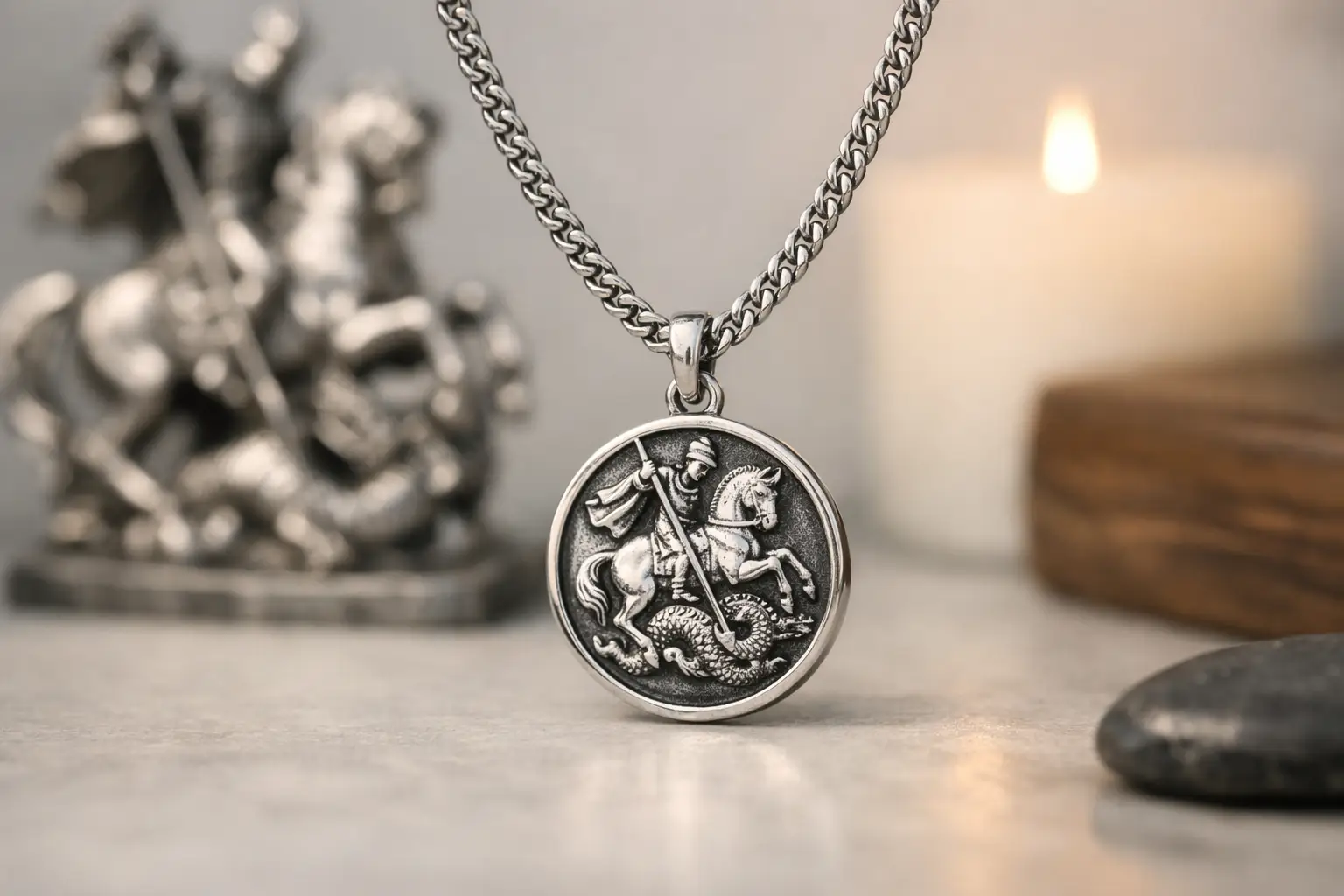
The image of Holy Great Martyr George on a Saint George pendant necklace is not merely an image of courage. It recalls a saint who confessed Christ before earthly power, accepted suffering rather than deny the faith, and remains a beloved intercessor for the faithful. Worn near the heart, such a pendant can become a quiet companion in prayer, a remembrance of spiritual vigilance, and a meaningful expression of Orthodox inheritance.
Saint George is often shown mounted on a white horse, striking the serpent with his spear. This familiar iconographic image speaks of the victory of faith over evil, yet its deepest meaning is not worldly triumph. The saint’s strength came from his steadfast confession of the Lord. For this reason, a pendant bearing his image is especially cherished by those seeking courage, protection, and constancy in difficult seasons of life.
The Meaning of a Saint George Pendant Necklace
The Holy Great Martyr George lived in the early fourth century and served as a soldier before his martyrdom under Emperor Diocletian. When persecution of Christians began, he openly declared his faith in Christ. Neither threats nor torture persuaded him to offer sacrifice to idols. His witness brought many others to belief, and the Church honors him as a victorious martyr – victorious not because he overcame death, but because he remained faithful through it.
In Orthodox iconography, the serpent represents evil, fear, and the forces that oppose the life of the soul. Saint George’s spear is sometimes understood as the power of faith, strengthened by the Cross. His image belongs naturally in a Christian home, prayer corner, or personal devotional object because it calls the faithful to resist sin with humility and prayer.
A pendant is a small object, but it can hold serious spiritual purpose. Each time the wearer touches it before leaving home, entering a hospital, beginning a journey, or facing a hard conversation, it may become an occasion to pray: “Holy Great Martyr George, pray to God for me.” The pendant itself is not a charm. Orthodox Christians place their trust in God, asking the prayers of His saints. This distinction preserves the sacred meaning of the image and protects it from superstition.
Selecting a Saint George Pendant Necklace for Prayer
A Saint George pendant necklace should first be chosen for the clarity and reverence of its image. A well-made Orthodox pendant does more than borrow a religious motif. It presents the saint in a manner that respects the tradition of iconography, with a recognizable figure, dignified expression, and carefully formed sacred details. For many faithful, canonical character matters as much as the metal or finish.
The reverse side also deserves attention. Some pendants include a cross, a prayer, the saint’s name, or a short inscription. These details can make the piece more personal without distracting from the central image. A cross on the reverse is especially fitting, since Saint George’s martyrdom and victory are inseparable from Christ’s saving Cross.
Material should be considered according to both devotion and daily use. A fine silver 999 plated pendant offers a luminous, traditional appearance and can be a beautiful choice for feast days, gifts, or regular wear when cared for properly. Sterling silver is valued for its enduring character and its quiet, classic tone. Gold-accented designs bring warmth to the icon and can make a particularly memorable offering for a godchild, spouse, parent, or graduate.
There is no single “best” metal for every person. Someone who works with their hands or wears a pendant every day may prefer a smaller, sturdy silver piece with a simple chain. A family choosing a baptismal or name-day gift may prefer a more ornate medallion, perhaps in a gift case. The right choice is one that can be worn respectfully and kept with care.
Size, Chain Length, and Everyday Wear
The size of the pendant shapes how it will be used. A smaller Saint George medallion rests discreetly beneath clothing and suits daily prayerful wear. A larger pendant reveals more of the iconographic detail and may be better for those who wish to wear it visibly or present it as a significant gift.
Chain length is equally practical. A shorter chain keeps the pendant near the upper chest and may work well beneath a shirt or blouse. A longer chain allows the image to rest lower and can accommodate a larger pendant. The bail opening should fit the chain securely, especially if the wearer intends to use a preferred chain already owned.
For young people, select a scale appropriate to their age and make sure the clasp and chain are secure. For an adult, comfort is often the deciding factor. A devotional necklace should not be so heavy, delicate, or ornate that it remains in a jewelry box. The most meaningful piece is often the one that accompanies its wearer through ordinary days.
A Faithful Gift for Name Days and Milestones
A Saint George pendant necklace makes a fitting Orthodox gift for a person named George, Yuri, Egor, Georgi, or any name received in honor of the holy martyr. A name day is not simply a personal celebration. It is a day to remember one’s heavenly patron and renew the desire to imitate the saint’s faith. A pendant can make that remembrance tangible year after year.
It is also a thoughtful gift for a godson or goddaughter, a young person entering military service, a graduate beginning a new chapter, or a loved one who needs encouragement during illness or hardship. The image of Saint George speaks powerfully to those facing fear, but it should be given with tenderness rather than as a promise that life will become easy. The saint teaches faithfulness amid trial, not escape from every trial.
Presentation matters when the object is intended as a gift. A proper gift box or icon-inspired case protects the pendant and emphasizes that it is not an ordinary accessory. If the piece is being given for a baptism, name day, wedding, or feast day, including a small prayer card or a written note about Saint George’s life can help the recipient understand the holy image they have received.
Wearing Sacred Images with Reverence
Orthodox jewelry is best worn with the same respect given to an icon in the home. Keep the pendant clean, store it carefully when it is not being worn, and avoid treating it as a fashion statement detached from its Christian meaning. If a pendant has been blessed, handle it with particular reverence. If it has not been blessed, a priest may bless it according to local parish practice.
The question of whether to wear a saint pendant alongside a baptismal cross depends on personal practice and pastoral guidance. The baptismal cross remains central, and many Orthodox Christians wear it closest to the body. A Saint George pendant may be worn with it, on a separate chain, or at other times. When uncertain, asking one’s parish priest is always wiser than following trends or assumptions.
Care for silver and gold-accented pieces gently. Perfume, chlorine, lotions, and harsh cleaning agents can affect a finish or dull fine details. A soft, dry cloth is usually sufficient for regular care. For handmade or plated devotional jewelry, abrasive polishing can do more harm than good, so it is better to preserve the original surface patiently.
A Small Image, a Steady Reminder
Saint George’s icon does not ask the wearer to admire bravery from a distance. It asks for the kind of courage that begins quietly: prayer before action, truthfulness when compromise is easier, and trust in Christ when fear presses close. Chosen with reverence and worn in faith, a Saint George pendant necklace can remain a treasured reminder that the saints pray with us, and that every victory worth seeking begins with faithfulness to God.


