Submit a prayer note
Orthodox name day gifts follow the meaning of the day itself. A name day is the feast of the saint whose name a person received at baptism, so the most fitting presents point back to that saint and to prayer: an icon of the patron, a prayer book, a small cross or medallion. Ordinary gifts are welcome too, and many families give both.
If you have friends or in-laws from Greece, Cyprus, Georgia or Eastern Europe, you have probably noticed that the name day can matter as much as a birthday, sometimes more. This guide explains what the day is, how it is kept, and which gifts suit it.
What an Orthodox name day is
Every Orthodox Christian is baptised with the name of a saint. That saint becomes their patron, and the day the Church commemorates the saint becomes their name day. In Greek it is the giorti, the feast; in Slavic languages it is often called the day of the Angel, an old way of speaking about the patron saint as a person's heavenly guardian. It should not be confused with the Guardian Angel, who is a different figure, although the two are often mixed up.
Many saints are commemorated on more than one day a year. In that case families usually keep the main feast, or the one that falls soonest after the person's birthday. If you are not sure who your own patron is, our guide to choosing a patron saint icon explains how to find out.
Name day or birthday: what is the difference
A birthday is about the person. A name day is about the saint, and the person celebrates in the saint's company. That changes how the day is kept.
In the morning the person celebrating usually goes to the Liturgy, and many prepare with confession so that they can receive Communion. At home they may read the saint's troparion or a passage from their life. The meal and the guests come afterwards. If the name day falls on a fasting day, the table is a fasting one.
In Greece and Cyprus the name day is often the bigger celebration. Friends call, neighbours drop in without an invitation, and the house is ready with sweets and coffee for anyone who comes. People whose names have no saint traditionally celebrate on All Saints' Sunday, the first Sunday after Pentecost.
In Slavic families the custom varies more. Some keep the name day with a family meal, others mark it quietly with prayer and a phone call. Either way, someone who knows their saint's day will notice that you remembered it.
Name day gift ideas with meaning
The best Orthodox name day gifts connect with the feast. Here are the traditional choices:
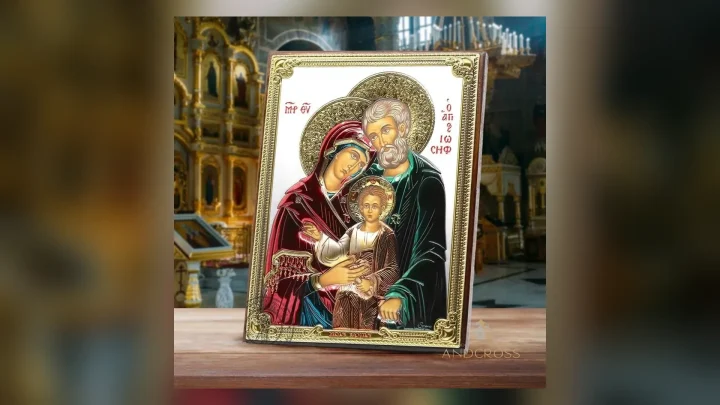
- An icon of the patron saint. If the person does not have one yet, nothing suits the day better. If they do, an icon of another saint the family loves, or of the Mother of God, is a good alternative.
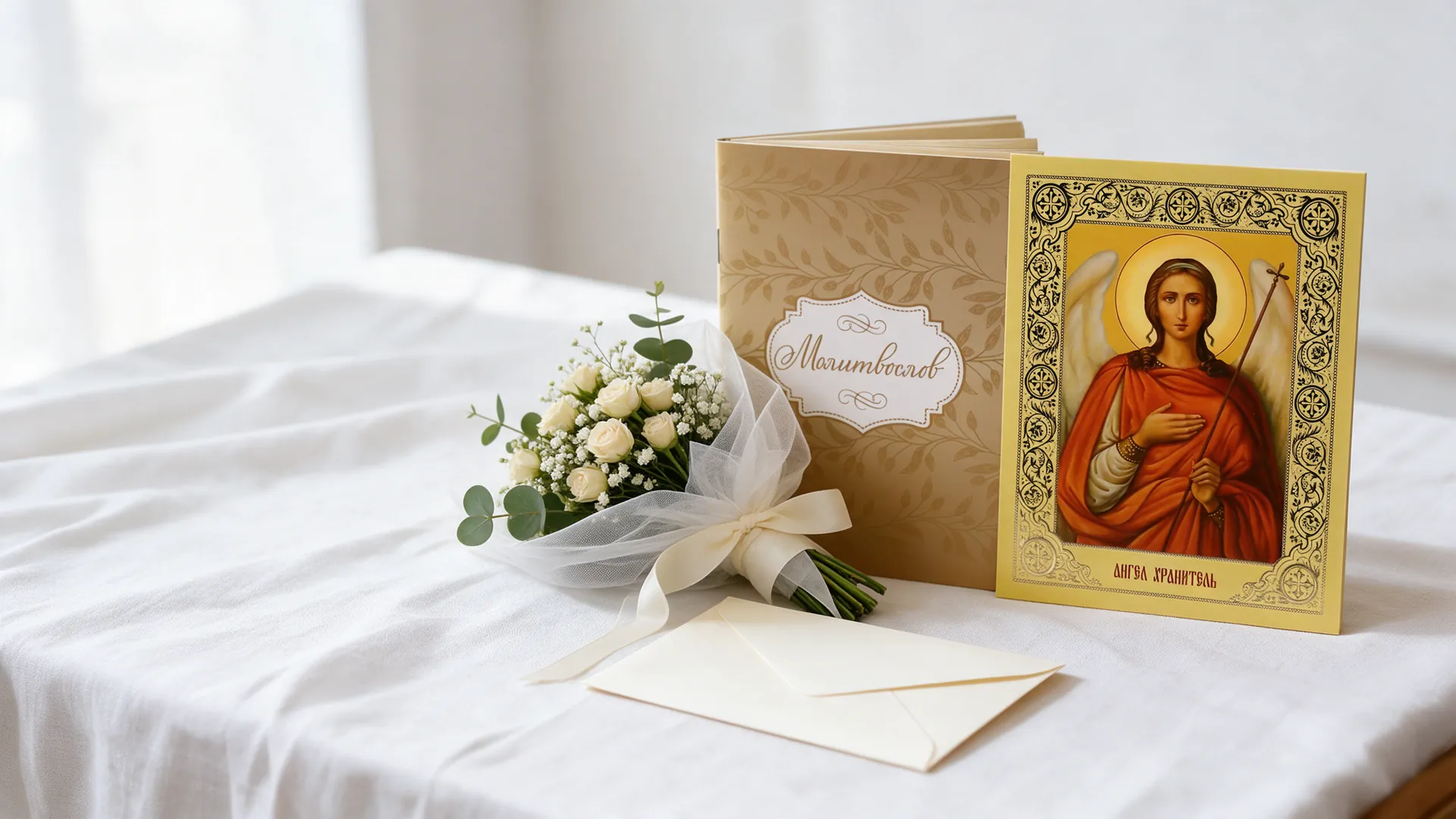
- A Gospel, a Psalter or a prayer book. Our books section has all three.
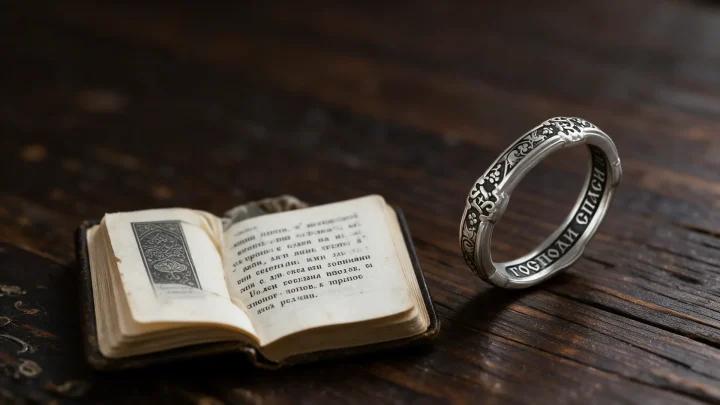
- A silver cross, a saint's medallion or a prayer ring. A medallion of the patron saint can be worn on the same chain as the cross.
- A prayer rope or church candles for prayer at home.
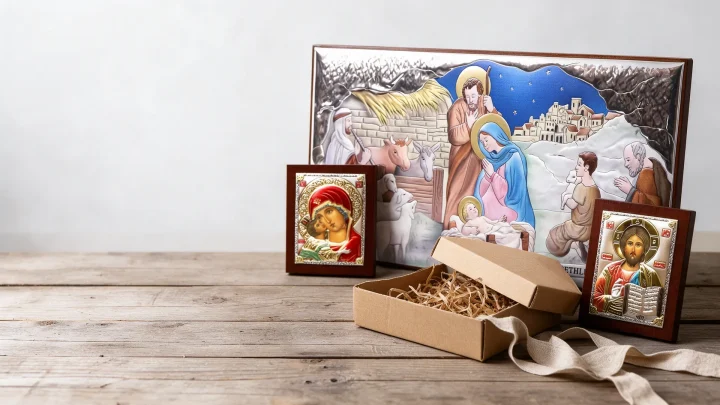
- A gift set, if you want to give several things together.
Traditional name day gifts in Greek homes are often simple: flowers, a box of sweets, a bottle of wine for the table. There is nothing wrong with that, and many guests bring a small religious gift alongside. A card with a few words about the saint, or their troparion, makes even a modest present personal.
What to avoid: decorative "icons" on magnets and calendars, images without an inscription, and anything sold as a charm or talisman. A cross or an icon is given for prayer, and an Orthodox Christian may find a lucky charm awkward to receive.
Gifts for a woman, a man and a child
For a woman or your mother. An icon of her patron saint, or an icon of the Mother of God she has long wanted. A well-bound prayer book or a silver medallion is also a good choice. For someone you know less well, keep it modest: a small icon or a box of church candles.
For a man. The icon of his patron, a Gospel or Psalter, a men's prayer ring. If his patron is a soldier saint such as St George or St Demetrios, an icon of that saint is often the first choice.
For a child or godchild. A small patron saint icon to keep by the bed suits a young child. A teenager may appreciate a silver cross, a medallion of their saint or their own prayer book. Godparents often give a godchild something on every name day, and over the years these gifts become the child's own small icon corner.
How to greet someone on their name day
In Greek the greeting is "Chronia polla", "Many years". In Slavic languages people say "Happy Angel's Day" or "Happy name day", and wish the person the help of their saint. Anywhere in the Orthodox world, "Many years" is understood.
For someone close to you, the most valuable gift is prayer. You can pray for them at home, or submit a prayer note for their health: on our prayer notes page you can enter up to five names, which are commemorated at the relics of St Gabriel in Samtavro monastery and in the Monastery of the Nativity of the Most Holy Theotokos.
Orthodox name day gifts from our catalogue
Our gifts section brings together items that suit Church feasts, and the gift sets section has sets that are ready to give. The catalogue includes icons from the workshops of the Pskov-Caves and Danilov monasteries, consecrated in those monasteries, sterling silver crosses, medallions and prayer rings, the Gospel, the Psalter, prayer books and church candles. Every item card states where it was consecrated.
We ship from Tallinn by registered post with a tracking number within 1-3 working days of payment. If the name day is close, order a little early so that the gift arrives in time.