Submit a prayer note
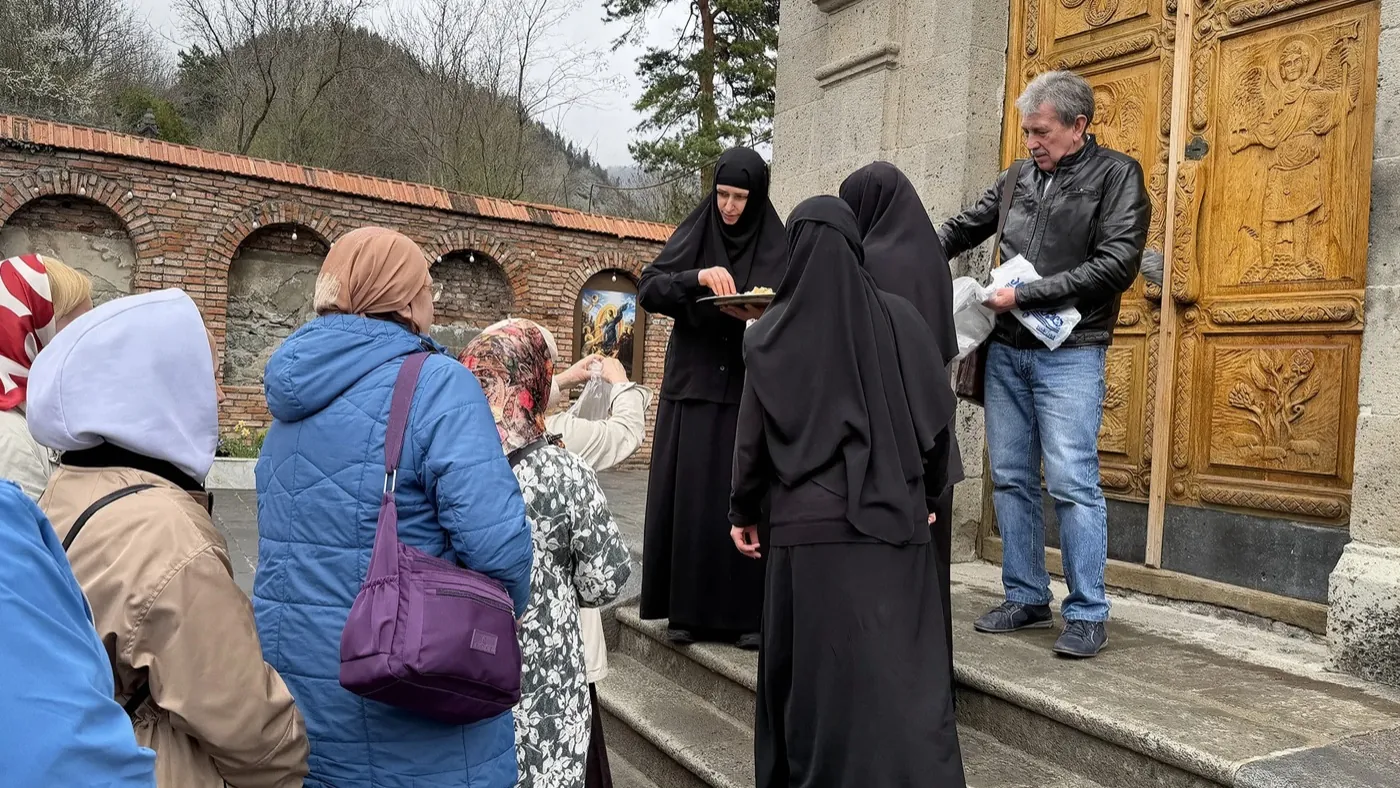
An Orthodox pilgrimage is a trip made for the sake of prayer: to the relics of a saint, to a monastery on its feast day, to a place where God has been honoured for centuries. Everything else on the way, the flights, the hotels, the long drives, serves that one purpose. That is why the Church has always spoken of pilgrimage as something done with the whole person. The soul prays, and the body walks, gets up before dawn, stands through long services and grows tired.
The Andcross centre has taken pilgrims from Tallinn to Orthodox shrines since November 2000. This guide covers what we have learned about getting ready: the inner preparation and the practical side, which matter equally.
What makes a trip a pilgrimage
In the early centuries a pilgrim was someone who went to the Holy Land to pray at the Tomb of the Lord. Over time the word came to mean anyone who sets out to pray and venerate a holy place, whether it is on another continent or a couple of hours away by coach. A day trip to a nearby convent for the Liturgy is a pilgrimage in the full sense.
Metropolitan Cornelius of Tallinn and All Estonia, with whose blessing our centre was founded, wrote that each group should travel with a priest who holds talks and explains the meaning of what the pilgrims see. In his words: "Only when there is a living account and the presence of the pastoral word and pastoral help is it not an 'excursion' but a true pilgrimage."
Soul and body together
Orthodox Christianity does not split a person in two. Illness of the body weighs on the soul, and a troubled soul wears the body down. A pilgrimage touches both. Pilgrims go to confession and receive Communion, pray at relics, are anointed with blessed oil, go down to a holy spring. At the same time they rest from ordinary life and see it from a distance.
People come to the saints carrying illness, grief or fear for their children. Some find relief, some find the strength to carry on. Help comes from God, by His mercy and through the prayers of the saints, and no one can set its time or form in advance. A pilgrimage is undertaken in faith and left in His hands.
The body has its share of work too. Our programmes include walks, early starts and long transfers. On the trips to Georgia the group spends its last days in Borjomi, resting after the monasteries, with doctors' consultations and check-ups at a sanatorium for those who want them.
How to plan a pilgrimage
Start with a conversation. A place in one of our groups is confirmed after you have spoken with the coordinator and paid the deposit, and that first call is the moment to mention any health or mobility limits. On many trips the programme can be adapted, and the experience of the NIKA association of the disabled helps here.
Then check the practical points:
- For trips outside the EU you need a passport valid for at least six months after your return. EU citizens do not need a visa for Georgia.
- Each participant arranges their own travel insurance; we can suggest where.
- Dress, photography and filming follow the rules of each monastery. We are guests, and the coordinator reminds the group before every visit.
- If you cancel in advance, the deposit is refunded in full, except for ticket costs already incurred.
The full conditions are on the terms of participation page, and a packing list is in our article on what to take on a pilgrimage.
Preparing your heart
The inner side needs time as well:
- Pray for the trip and ask your parish priest for a blessing.
- Read about the saint and the place you are going to. Each shrine we visit has its own page, such as Samtavro monastery in Mtskheta.
- If you can, go to confession at home, so that you can receive Communion calmly during the trip.
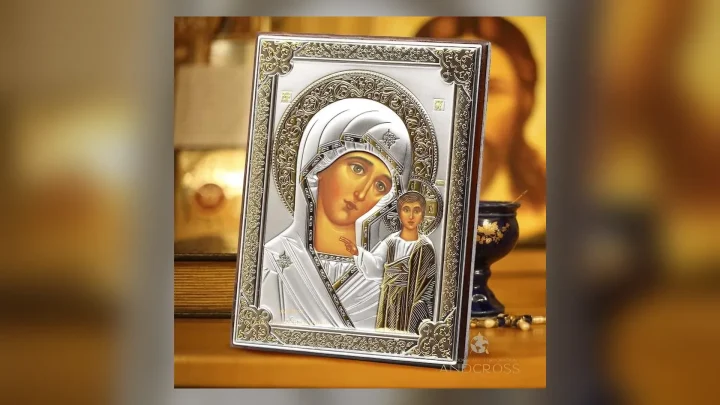
- Write down the names of the living and the departed you want to pray for at the relics.
Many people worry that they will "feel nothing" at the shrine. That is common and says nothing about whether the prayer was heard. Pray in simple words, as you can. Often the answer comes later, as quiet or clarity you notice only back home.
At the shrine
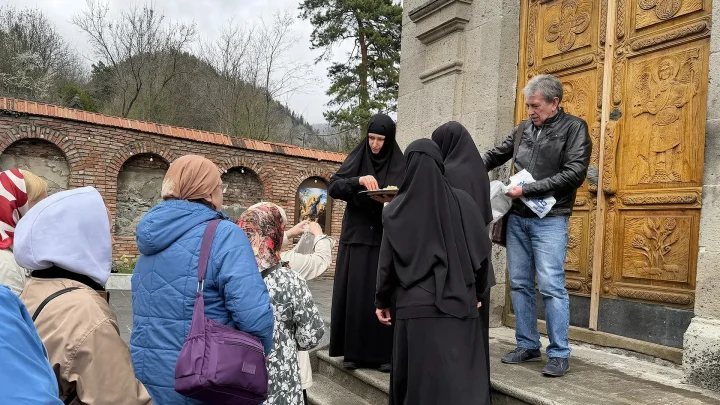
Arrive for the beginning of the service, not the end. At the relics people wait their turn without pushing: two bows with the sign of the cross, a kiss on the reliquary, a third bow. Say your request inwardly, in a few words. If you want to stay longer, step aside so others can come forward. Notes with names are handed in at the candle desk or through the coordinator, who brings prayer notes for the living and the departed to the relics of St Gabriel at Samtavro on every Georgian trip.
Orthodox pilgrimage from Estonia with Andcross
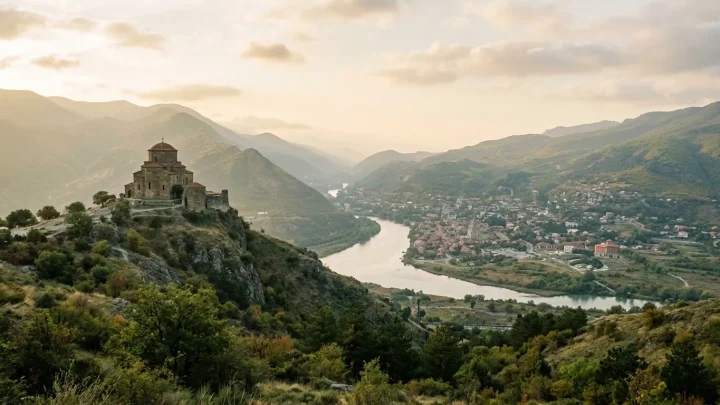
Our groups are small, and a coordinator travels with each one from Tallinn. The longest trip goes to Georgia. Its main goal is Samtavro monastery in Mtskheta, where the relics of St Gabriel (Urgebadze) rest; the group spends two days there to attend the service and stay at the relics without rushing. The programme also includes Svetitskhoveli cathedral, Bodbe monastery with the relics of St Nino, the churches of old Tbilisi with Sioni Cathedral, and Borjomi.
There are day trips from Tallinn as well, there and back on the same day: to Pühtitsa convent for the Dormition feast, and to the village of Niina on the shore of Lake Peipus for the Divine Liturgy in the Church of the Protection of the Most Holy Theotokos.
The trips are run by the NIKA association, which together with Andcross takes people for whom travel is hard, the elderly, the ill and the less mobile, to the shrines.
After you come home
A pilgrimage continues once the bags are unpacked. Keep praying to the saint whose relics you visited, keep the list of names by your icons, and send a prayer note to the same monastery each year. Many of our pilgrims do exactly that, and then travel again. The schedule, day-by-day programmes and a request form are on the pilgrimages page, and the coordinator replies within one working day.