Submit a prayer note
An Orthodox pilgrimage to Georgia follows the story of one of the oldest Christian nations. In the 4th century St Nino, Equal-to-the-Apostles, preached here; King Mirian and Queen Nana were baptised, and the country followed them. The shrines connected with that story stand within a few hours of each other, and in Mtskheta, the ancient capital, they share a single small town with the relics of a saint of our own time, St Gabriel of Samtavro.
The Andcross pilgrimage centre has taken pilgrims from Estonia to Orthodox shrines since November 2000. Georgia is our longest trip: twelve days, from Tallinn via Tbilisi. This article walks through the places on the route and then explains how the trip itself is organised.
St Nino and the baptism of Georgia
According to tradition, St Nino came to Georgia carrying a cross made of vine branches bound with her own hair. Through her prayers the queen was healed and the king came to faith, and the first church was raised in Mtskheta. The vine cross, by tradition, is kept in Sioni Cathedral in Tbilisi, and the shape of it is recognised everywhere in Georgia.
Almost every stop on a Christian pilgrimage in Georgia is linked to her. She lived and prayed where Samtavro monastery now stands. The first church built at the baptism of the country stood where Svetitskhoveli is today. She ended her earthly life at Bodbe, and her relics rest there. Knowing the story before you go makes each place easier to pray in.
Mtskheta: Svetitskhoveli cathedral and Jvari
Mtskheta lies twenty kilometres from Tbilisi. It is a small town, and its main shrines are close enough to visit in one day.
Svetitskhoveli cathedral is the patriarchal cathedral and one of the principal churches of Georgia. The present building dates from the 11th century and is the work of the architect Arsukisdze, raised on the site of the first 4th-century church. According to tradition, the Robe of Christ, brought from Jerusalem, rests beneath it. Georgian kings are buried inside. Allow time here; it is a place to stand and pray, and it rewards a slow visit.
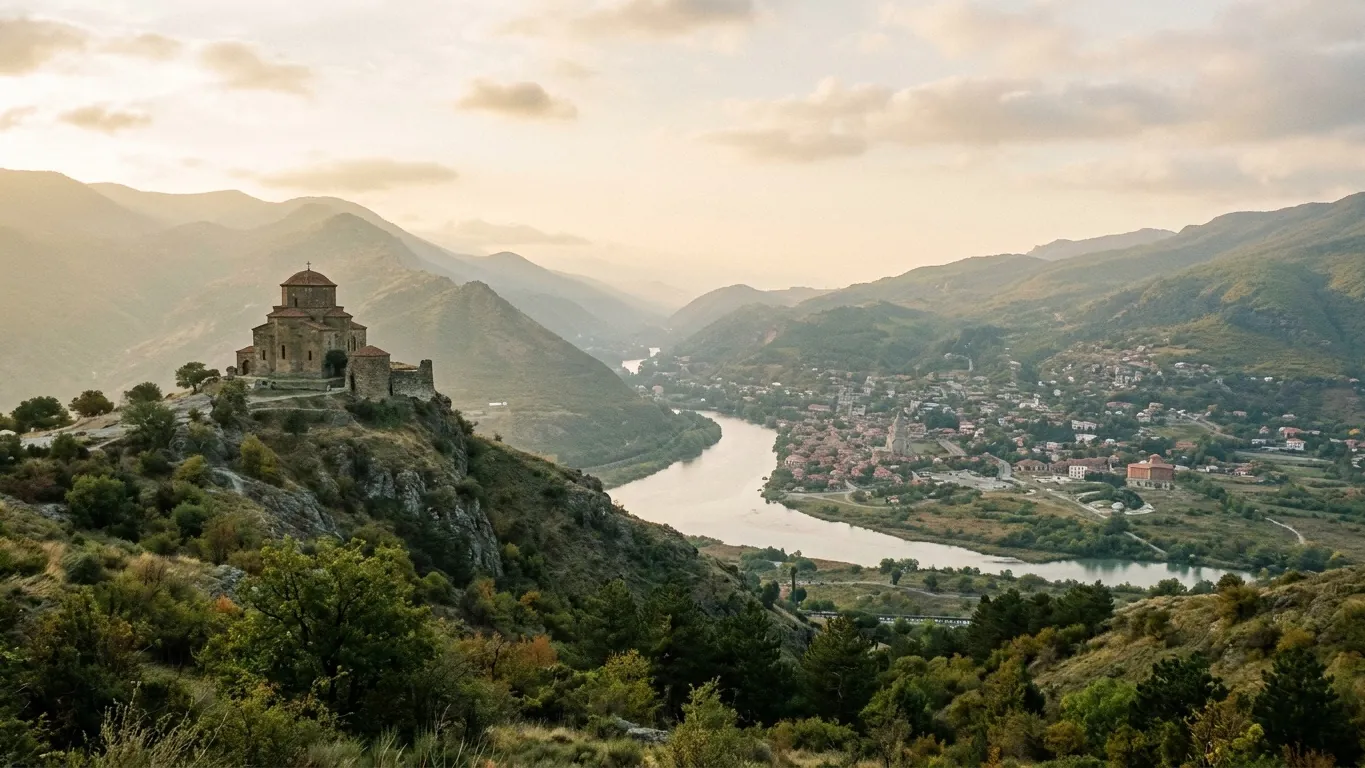
On the hill above the town, where two rivers meet, stands Jvari monastery. The name means "cross". Tradition holds that St Nino set up a cross on this spot and that a church was later built over it. Jvari has been part of our programme in Mtskheta, and from the hilltop you can see the whole old town below, Svetitskhoveli and Samtavro included.
Samtavro monastery, Georgia: the relics of St Gabriel
Samtavro monastery stands in Mtskheta, a short distance from the cathedral. It was founded in the 4th century where St Nino lived, and today it is a working convent. The Church of the Transfiguration holds the relics of St Gabriel (Urgebadze) and the tombs of King Mirian and Queen Nana. Father Gabriel spent his last years at the monastery and was buried there; in 2014 his relics were moved into the church.
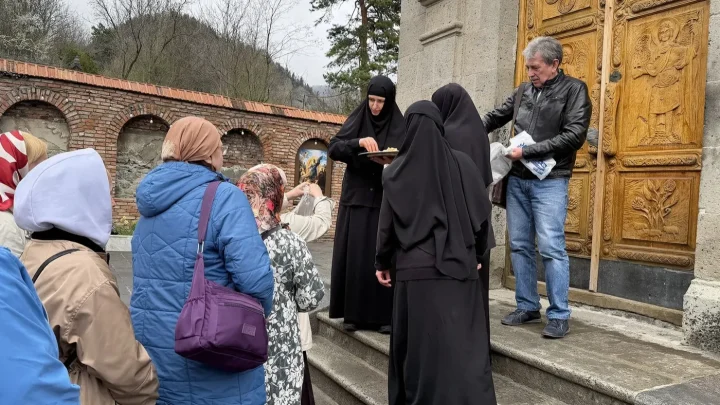
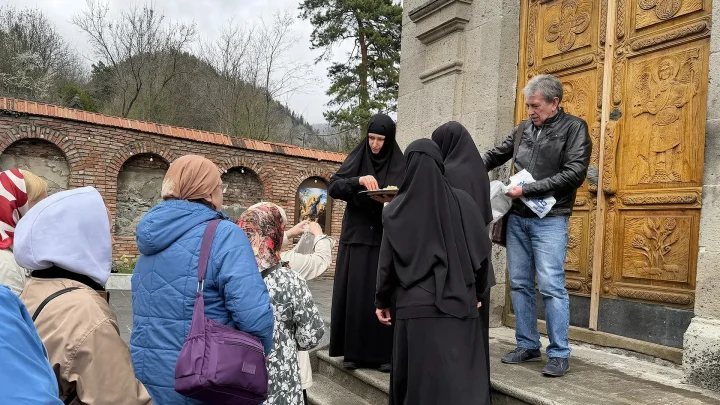
Samtavro is the main goal of our trips to Georgia. The group spends two days there, so that there is time to attend the service and to pray at the relics of St Gabriel without hurrying. We also bring prayer notes for the living and the departed to his relics. The history of the convent and its other shrines is covered in our article on Samtavro monastery in Mtskheta.
Bodbe: the monastery of St Nino
Bodbe monastery is in Kakheti, two kilometres from the town of Sighnaghi. St Nino ended her earthly life here, and her relics rest in the monastery. By tradition, the first church over her grave was built by King Mirian.
Bodbe is a working convent today. Pilgrims pray at the relics of St Nino and then walk down the slope to her spring. After Mtskheta, where her story begins, Bodbe brings it to a close.
Borjomi and the Monastery of the Nativity
The group spends the last days of the trip in Borjomi, in the Borjomi gorge among the mountains of the Caucasus, about 160 km west of Tbilisi. In the town itself stands the Monastery of the Nativity of the Most Holy Theotokos, a working convent of the Georgian Orthodox Church. Its main church dates from 1865, and its patronal feast is the Nativity of the Theotokos on 21 September (new style).
The monastery keeps an ossuary with the remains of ancient monks who, according to monastery tradition, were martyred during raids on the monasteries of the gorge. Pilgrims come there to pray for health and for help in illness and sorrow, and are anointed with blessed oil. This is the second place in Georgia where we take prayer notes.
Borjomi is also where the group rests after the monasteries. Those who wish can see doctors and have check-ups at the sanatorium.
How our pilgrimage to Georgia is organised
The trip lasts twelve days. The group flies from Tallinn to Tbilisi with a coordinator from Tallinn, groups are small, and the day-by-day programme is known in advance. Its main points are:
- departure from Tallinn, arrival in Tbilisi, check-in;
- Samtavro monastery, with the service and prayer at the relics of St Gabriel, and Svetitskhoveli;
- Bodbe monastery and the relics of St Nino;
- Tbilisi: the churches of the old town, Sioni Cathedral and free time;
- Borjomi: rest, and doctors' consultations for those who want them.
A place in the group is confirmed after a conversation with the coordinator and payment of the deposit. You need a passport valid for at least six months after your return; EU citizens do not need a visa for Georgia. Each participant arranges their own travel insurance. The programme includes walks, early starts and long transfers, so mention any health or mobility limits when you apply; on many trips the programme can be adapted. We are guests in every monastery, and the coordinator reminds the group of the rules on dress, photos and filming before each visit.
For the inner and practical preparation, read Orthodox pilgrimage for soul and body, and for a packing list, what to take on a pilgrimage.
The schedule, day-by-day programmes and the request form are on the pilgrimages page. Write through the form on the trip page, and the coordinator will reply within one working day with the cost and conditions. If you cannot travel this year, you can still send the names of your loved ones: we bring prayer notes to Samtavro and to the Monastery of the Nativity on every trip, and between trips we send them to the monastery by email.