Submit a prayer note

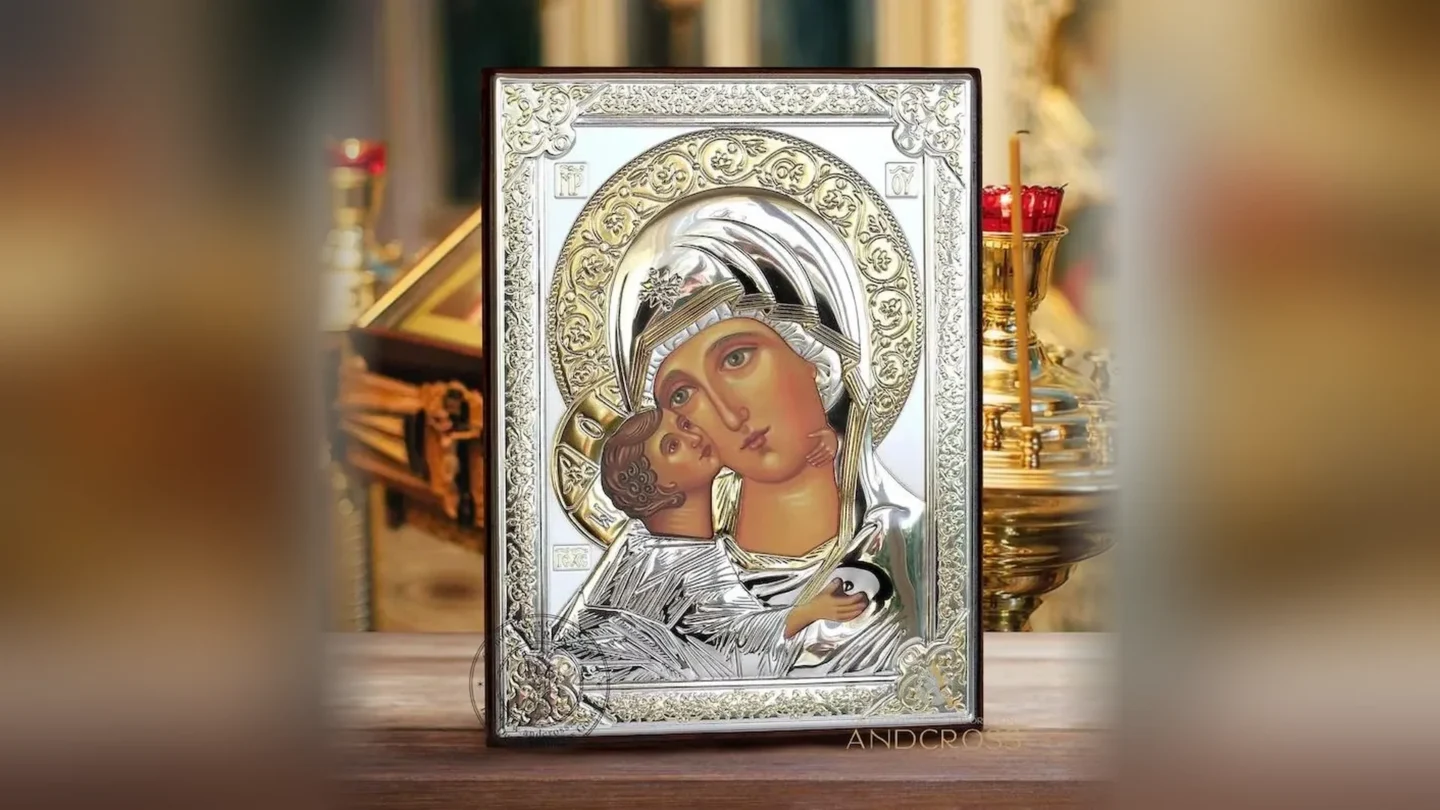
The Vladimir icon of the Mother of God, also called the Theotokos of Vladimir, is among the most venerated icons in the Orthodox world. Copies hang in churches and homes everywhere, while the ancient original has travelled from city to city for almost nine centuries.
This guide tells how the icon came to Moscow, explains what the image shows and how it differs from other icons of the Virgin, lists its feast days and offers some advice on choosing a Vladimir Mother of God icon for your home.
From Constantinople to Kyiv
Tradition says the first image was painted by the Evangelist Luke on a board from the table where the Holy Family ate. Art historians date the surviving icon to the first third of the 12th century and believe it was painted in Constantinople.
Around 1131 the icon was sent from Constantinople to Kyiv and placed in a convent at Vyshgorod, just outside the city, where it soon became known for miracles.
Why it is called the Vladimir icon
In 1155 Prince Andrew Bogolyubsky secretly took the icon north. Tradition tells that near the town of Vladimir the horses stopped and would not go on, and the Mother of God appeared to the prince in a dream. He founded Bogolyubovo on that spot and placed the icon in the Dormition Cathedral of Vladimir. From then on it has carried the town's name.
The protector of Moscow
In 1395 the army of Tamerlane marched on Moscow. The icon was carried from Vladimir to the city, with people kneeling and praying along the whole route. On the day it was met at the walls of Moscow, Tamerlane turned his army back without reaching the city. The Sretensky monastery, whose name means «meeting», was later built where the icon had been received.
The icon was remembered as the city's protector twice more: in 1480, when the army of Khan Akhmat withdrew from the Ugra river without a battle, and in 1521, when a Crimean khan retreated from Moscow. For centuries it stood in the Dormition Cathedral of the Kremlin. Today the original is kept in the church of St Nicholas in Tolmachi at the Tretyakov Gallery, where services are held before it.
What the Vladimir icon shows
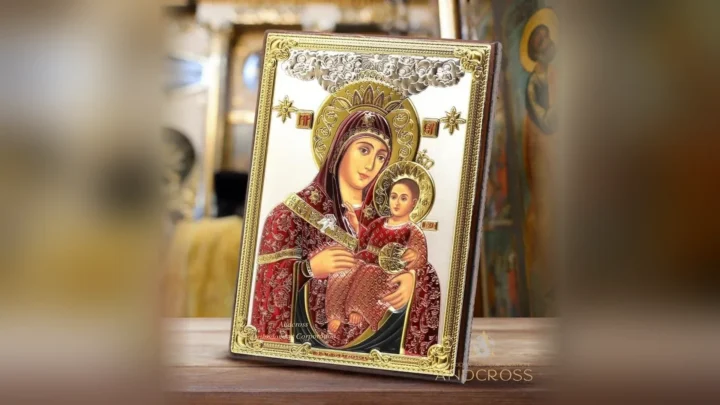
The Vladimir icon is the best-known example of the Eleousa, or Tender Mercy, type. The Christ Child presses his cheek against his Mother's and puts his left arm around her neck. The bare sole of his foot shows beneath his garment, a small detail that helps to recognise the Vladimir icon among similar images.
The Mother of God looks not at her Son but at the person praying. Her gaze holds both tenderness and sorrow, because she knows the path that lies ahead of him. The back of the ancient icon shows a prepared throne with the instruments of the Passion, so the image speaks of both Bethlehem and Golgotha.
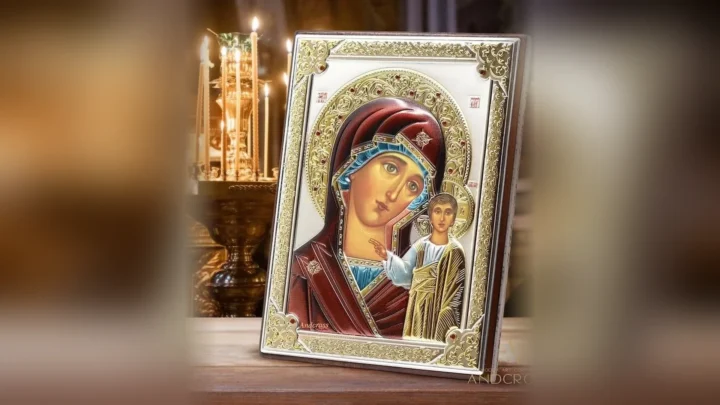
Set it beside the Kazan icon and the difference is clear at once. On the Kazan icon the Child stands upright and blesses, in the Hodegetria type described in our article on the Kazan icon. On the Vladimir icon Mother and Son are joined in an embrace.
Feast days and prayer
The Church celebrates the Vladimir icon three times a year:
- 3 June (21 May in the Julian calendar), for the deliverance of Moscow in 1521;
- 6 July (23 June in the Julian calendar), for the standing on the Ugra river in 1480;
- 8 September (26 August in the Julian calendar), the main feast, the Meeting of the Vladimir icon in 1395.
Because the icon so often protected a city in danger, Orthodox Christians pray before it for protection from harm and from hostility. People also turn to the Mother of God before this icon for peace in the family, for their children, in illness and grief, and for guidance before hard decisions. The troparion of the icon is in any prayer book, and the short prayer «Most Holy Mother of God, save us» is always fitting. The Church teaches that help comes from God through her prayers, and the icon helps us pray with attention.
Choosing a Vladimir icon for your home
The Vladimir icon usually stands in the icon corner on the left of the icon of Christ, and it is often among the first icons a new family receives. For other images of the Virgin chosen for the home, see which icon of the Mother of God to choose, and for arranging the corner, our guide to the Orthodox icon corner.
Our Vladimir Mother of God icons include silver-plated icons from 6.4 x 5 cm to 21 x 28 cm, sets with the icon of Christ, gift sets with candles and an akathist, and an icon set from the workshops of the Pskov-Caves monastery.