Submit a prayer note

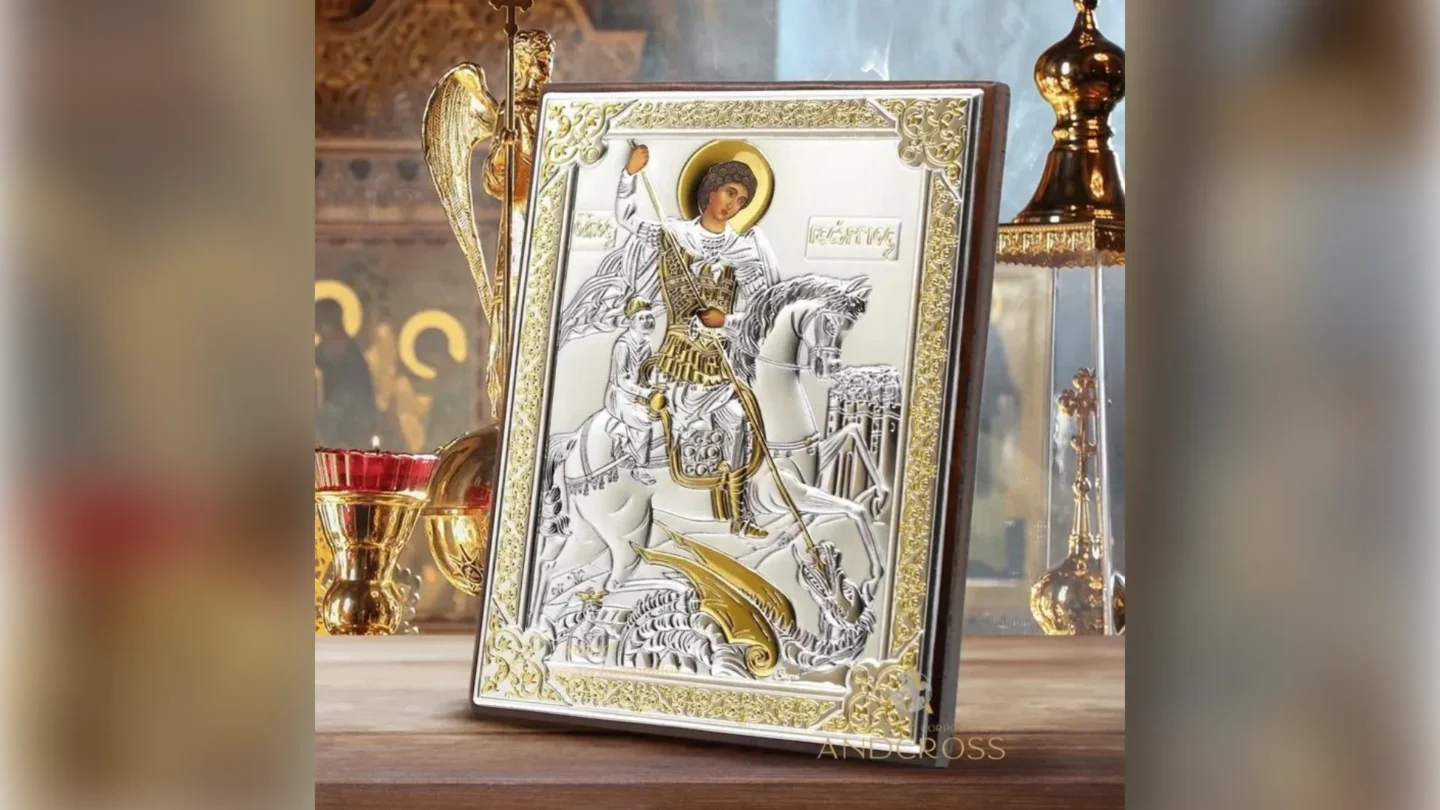
The St George icon is one of the best-known images in the Christian world: a young rider on a white horse driving his spear into a dragon. St George is honoured in East and West alike, in Georgia, Greece, Cyprus, Palestine and England, and countless churches and people carry his name.
This article explains who the Great Martyr George was, the meaning of his icon, what Orthodox Christians ask him to pray for and when his feasts fall. One of them, the autumn feast on 9 December, comes during the Nativity Fast.
The life of St George
George was born in Cappadocia into a Christian family. He became a soldier and, thanks to his courage, rose quickly through the ranks: his Life calls him a tribune who served close to the Emperor Diocletian.
When Diocletian began his persecution of Christians at the start of the fourth century, George gave his property to the poor, freed his servants and went before the imperial council. There he declared openly that he was a Christian and called for an end to the persecution. He was imprisoned and cruelly tortured: beaten, broken on a wheel and thrown into a pit of quicklime. According to his Life, the Lord kept him through it all, and many who saw his endurance came to faith, among them the Empress Alexandra.
St George was beheaded in Nicomedia in 303. The Church calls him a Great Martyr for the strength of his sufferings and the Victorious, or Trophy-bearer, for the victory he won by faith.
The meaning of the St George icon
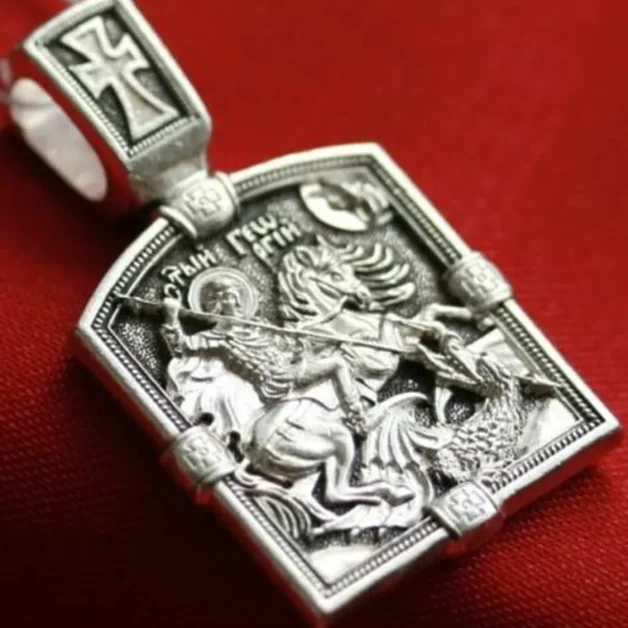
The most familiar icon shows St George as a young warrior in armour on a white horse. He pierces a dragon with his spear, while the hand of God blesses him from the corner of the icon. This scene is known as the Miracle of St George and the Dragon.
According to tradition, a dragon lived in a lake near a pagan city and demanded human sacrifices, and the people gave it their children. When the lot fell on the king's daughter, St George appeared, struck the dragon with his spear and led it into the city, and the people turned to Christ. That is why many icons also show the princess leading the tamed dragon on her belt.
The meaning of the image goes beyond the legend. The dragon stands for evil and sin, the ancient enemy of mankind. The saint defeats it with a slender spear topped with a cross, showing that evil is overcome by the power of Christ. The white horse speaks of purity, and the ease with which the saint holds his spear shows that God is fighting for him.
There are other types of the icon as well. St George is also painted standing in armour with a spear and shield, or in a martyr's cloak holding a cross, sometimes with scenes from his life around the edges.
What Orthodox Christians pray to St George for
Since early times St George has been honoured as the patron of soldiers and of all who serve and put themselves in danger. People ask his prayers:
- for soldiers and those in dangerous work;
- for travellers and everyone on the road;
- for protection from evil and for firmness in faith;
- for help in the inner struggle against one's own passions;
- for livestock and the harvest, a prayer of farmers since old times.
When we pray to St George, we ask him to intercede for us before the Lord. Help comes by the mercy of God, through the prayers of His saint.
St George's feast days: 6 May and 9 December
The main feast of St George is the day of his martyrdom, 23 April. Churches on the Julian calendar keep it on 6 May, churches on the Revised Julian calendar on 23 April itself.
On 26 November by the Julian calendar, which is 9 December in the civil calendar, the Church remembers the consecration of the church of St George in Kyiv in 1051. On 3 November (16 November) it celebrates the renewal of the church of St George in Lydda, where the saint was buried.
George, Yuri and Egor are forms of the same name, and people who bear it keep their name day on his feasts. A St George icon is a fitting gift for a man with this name, for someone in the armed forces, for a driver or for anyone who travels a lot. Our article on choosing a patron saint icon explains how to find the right saint by name. The December feast falls during the Nativity Fast, a good moment to remember the saint before Christmas.
St George icons and silver blessed on his relics
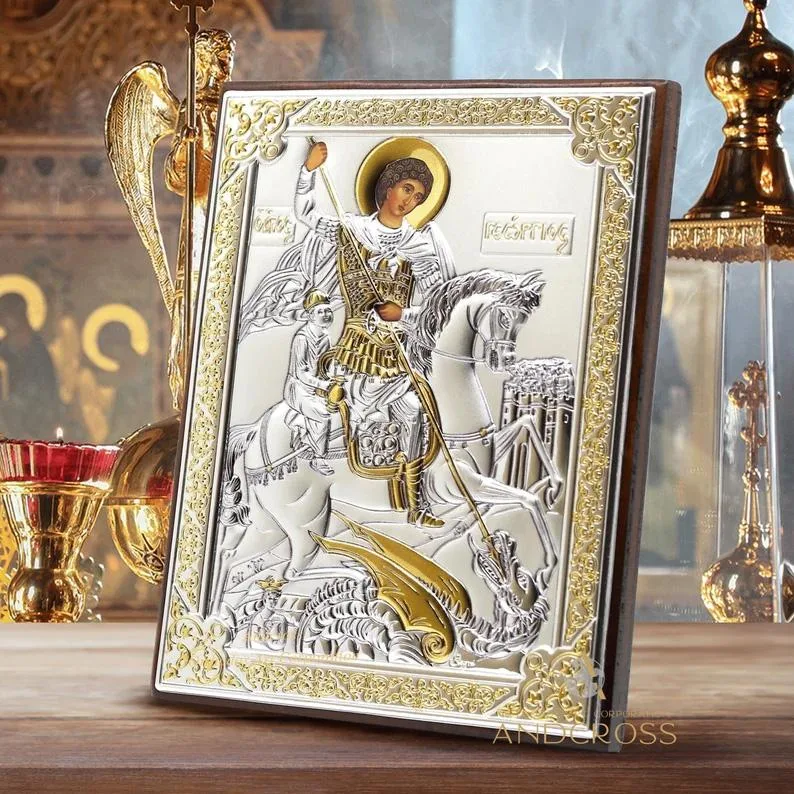
Our St George icons page brings together silver-plated icons in several sizes: small ones to take with you when you travel and larger ones for the icon corner at home, as well as sets with icons of Christ and the Mother of God. There is also a set with an icon of the saint from the workshops of the Pskov-Caves Monastery, with candles, a holder and an akathist.
St George has a special place in our workshop: all Andija silver, including crosses, medallions and rings, is blessed on relics of St George the Victorious. You can read more on our pages about the relics of St George and how our items are blessed. For those who want to wear a sign of his protection, our Orthodox crosses include designs with the image of St George.
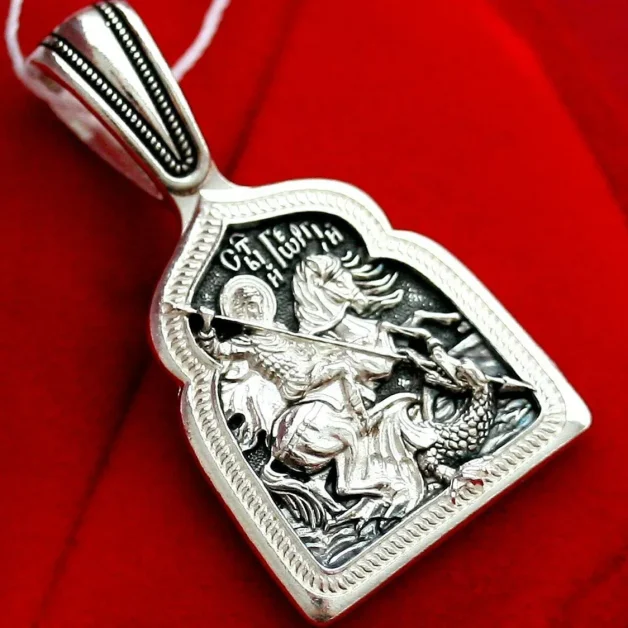
 particles of the relics of St George the Victorious