Submit a prayer note
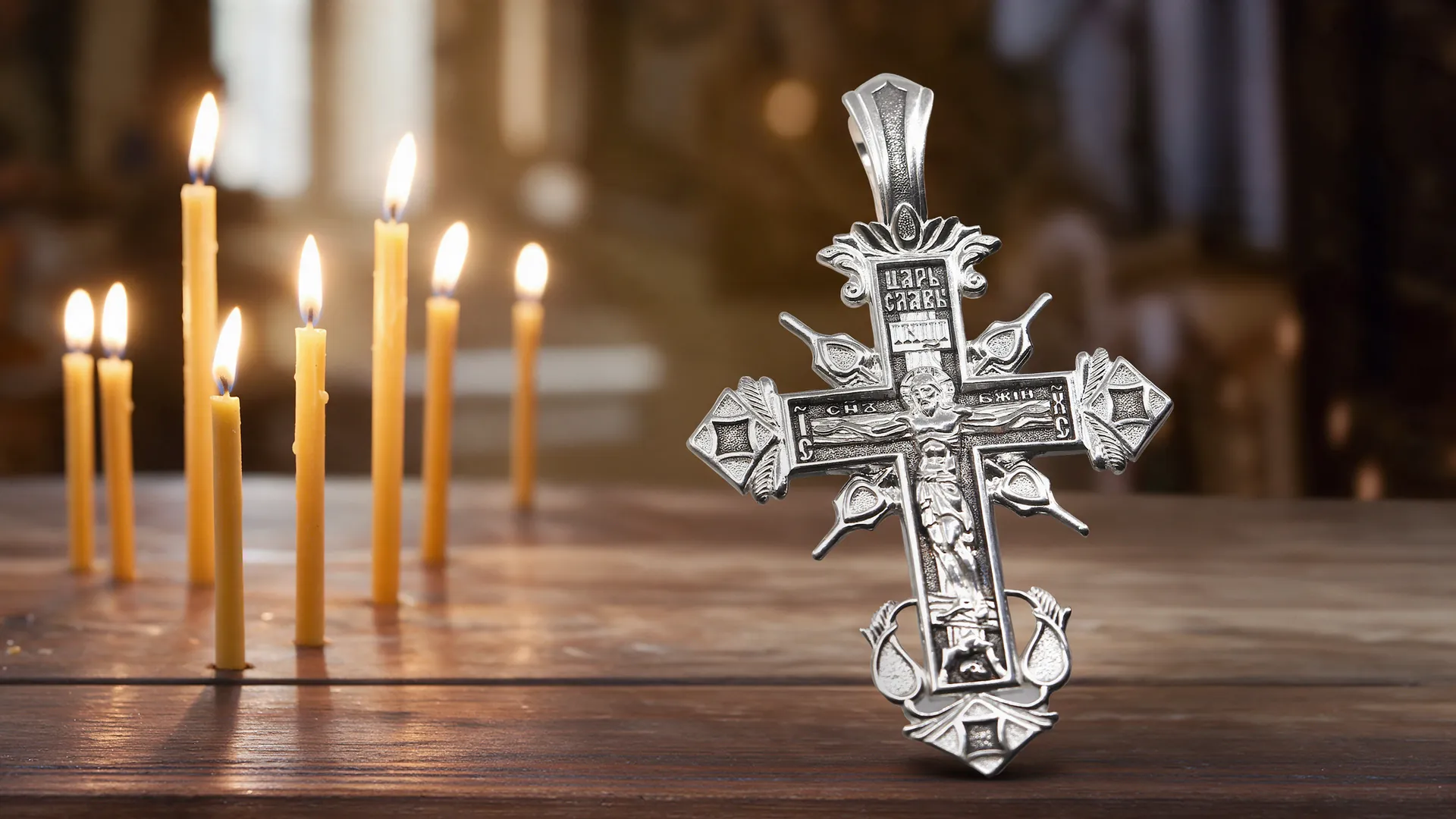
Blessed Orthodox items are offered by many shops, yet the word "blessed" on its own tells you very little. Blessed where, at which shrine, and who can confirm it? For a believer the answer matters. A consecrated item in the home is a reminder of prayer and of the place it is linked to: a monastery, the relics of a saint, a pilgrimage made to them.
That is why every item in the Andija catalogue states where it was consecrated, naming the relics or the monastery. This guide explains what those words mean, where each group of items is blessed, and how you can check it for yourself.
What a blessing means for an icon or a cross
A blessing is given by a priest, using the prayers of the Church's service book. The Church asks that the item serve the prayer of the person who owns it, and sprinkles it with holy water. From then on it is treated as something holy: kept in a clean place, handled with care, and used for prayer.
A blessed cross is no amulet. It does not protect anyone automatically, apart from the faith and prayer of the one who wears it. Help comes by the mercy of God, through the prayers of the saints we turn to, and a consecrated icon or cross keeps that in front of us every day.
If you buy an icon or a cross from an ordinary shop, it is taken to church to be blessed. Our article on how to bless an icon or a cross explains how to ask your priest.
Blessed on relics: what it means
Relics are the remains of saints, kept and venerated by the Church. Whole relics rest in reliquaries in churches; particles are kept in small caskets and sewn into the antimension on which the Liturgy is served. An item blessed at relics, or on particles of relics, is tied to a particular saint. Whoever wears it or prays before it knows whose shrine it was brought to.
Pilgrims have brought crosses, icons, oil and candles to the relics of saints since the early centuries, and carried them home to relatives who could not travel. For them such an item was part of the pilgrimage itself.
So when you see "blessed on relics" in a description, look for two things: the name of the saint and the name of the place. Without them the phrase cannot be checked.
Silver crosses, pendants and rings: the relics of St George
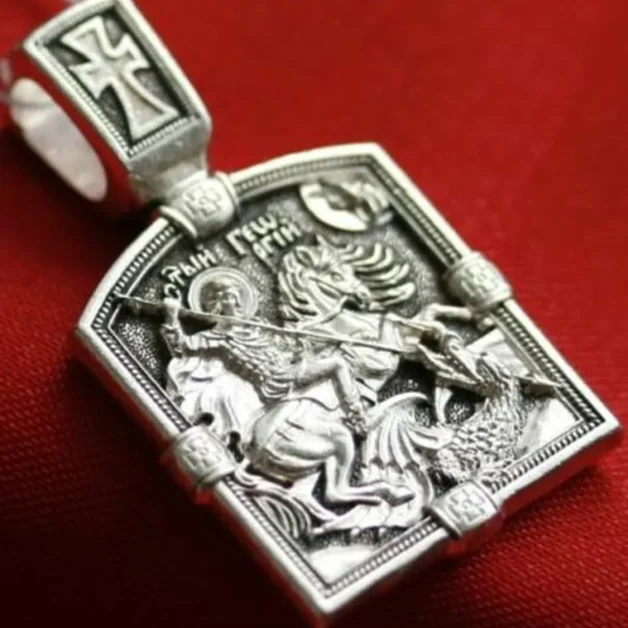
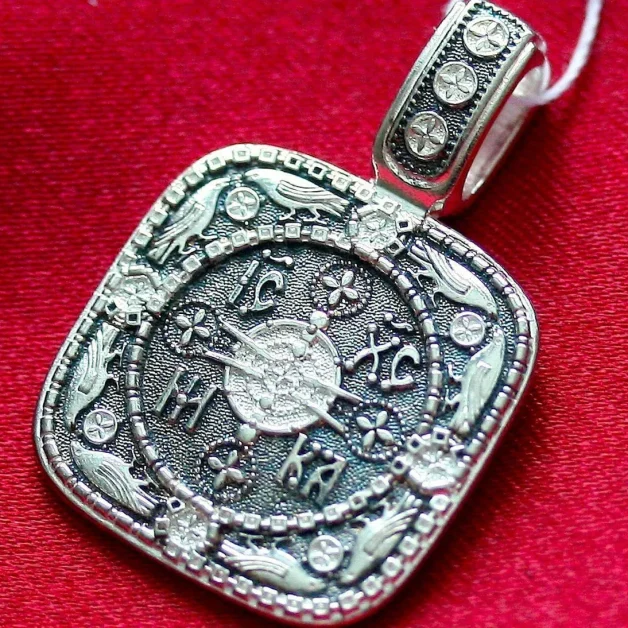
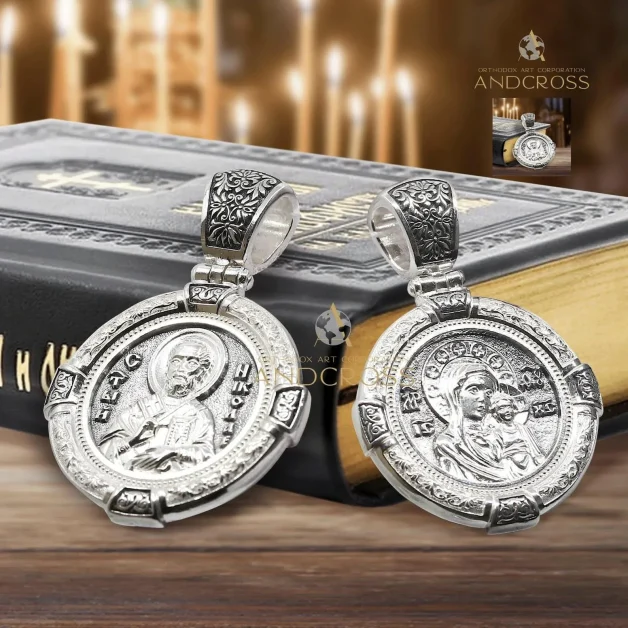
All silver crosses, pendants and rings in our catalogue are consecrated on particles of the relics of St George the Victorious.
The holy Great Martyr George suffered for Christ at the beginning of the 4th century under Emperor Diocletian. He is venerated as the patron of soldiers and a protector, and his image as a horseman slaying the dragon is known throughout the Christian world. A pectoral cross is worn every day, close to the body, and its product page names the saint at whose relics it was blessed.
The St Gabriel series: Samtavro monastery
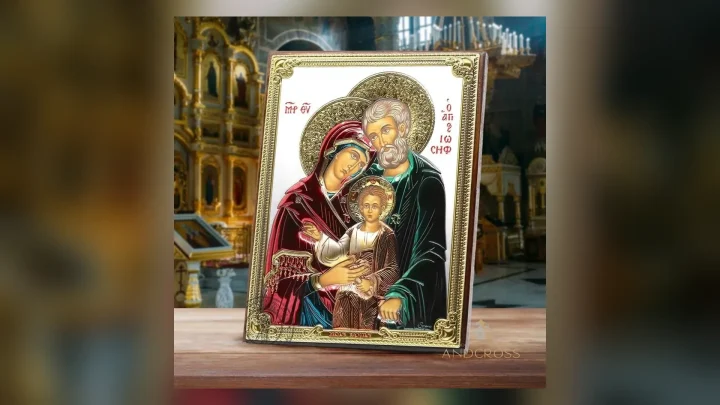
Icons with a particle of cloth from the relics, sets, prayer ropes, oil and candles from the St Gabriel series are consecrated in Samtavro monastery in Mtskheta, most of them at the relics of the saint. We bring these items to Samtavro on our trips and consecrate them there.
Samtavro monastery stands in Mtskheta, the ancient capital of Georgia, twenty kilometres from Tbilisi. It was founded in the 4th century where St Nino, Equal-to-the-Apostles and the enlightener of Georgia, lived, and today it is a working convent. The Church of the Transfiguration holds the relics of St Gabriel (Urgebadze) and the tombs of King Mirian and Queen Nana, the first Christian rulers of Georgia. Father Gabriel spent his last years at the monastery and was buried there; in 2014 his relics were moved into the church.
Our groups spend two days at Samtavro on every autumn trip. The monastery has given us a letter about the consecration of the St Gabriel series, and it is published on our consecration page. You can see the whole series in the St Gabriel collection.
Icons from monastery workshops
Icons of the Pskov-Caves monastery are crafted in the workshops of the Holy Dormition Pskov-Caves monastery and consecrated there. On the back of each icon is a certificate with the signature of the senior master and the seal of the monastery.
Icons of the Danilov monastery are crafted in the workshops of the Danilov stauropegial monastery and consecrated there as well. The workshop certificate is on the back.
These icons reach us already consecrated, in the monasteries where they are made. They do not need to be blessed again, though you are always free to show a new icon to your own priest.
How to check where an item was blessed
You can check the place of consecration in three steps.
- Read the product page. Every item states where it was consecrated, with a link to the page of the holy place.
- Look at the documents. Our consecration page publishes the letter from Samtavro monastery on the St Gabriel series and the certificates of the Pskov-Caves and Danilov monastery workshops. Alongside them are the letters of honour from Metropolitan Cornelius of Tallinn of 2007 and 2010 and the medal of Patriarch Theophilos III of Jerusalem of 2005. Each document opens in a large view.
- Turn the icon over when it arrives. Icons from monastery workshops carry the workshop certificate on the back.
If a product page does not name a place of consecration, the item can be blessed in your own parish in the usual way. If anything is unclear, write to us with a question about the particular item.
Caring for blessed items and choosing one
A consecrated icon belongs in your icon corner or on a clean shelf beside other icons, away from books and ornaments. A blessed cross is worn under the clothing and taken off only when there is a reason. Oil and candles from the St Gabriel series are meant for prayer, so use them rather than keeping them in a drawer.
If a blessed item is damaged, it is never thrown away. Take a damaged icon or a broken cross to church. When you give a blessed item as a present, tell the person where it was consecrated and at which shrine; for many people that is what makes the gift precious.
For an icon linked to a particular saint and place, start with the St Gabriel collection: every item there was consecrated at Samtavro, where his relics rest. For a cross or pendant to wear every day, choose silver. Each piece is consecrated on particles of the relics of St George the Victorious, and the product page says so.
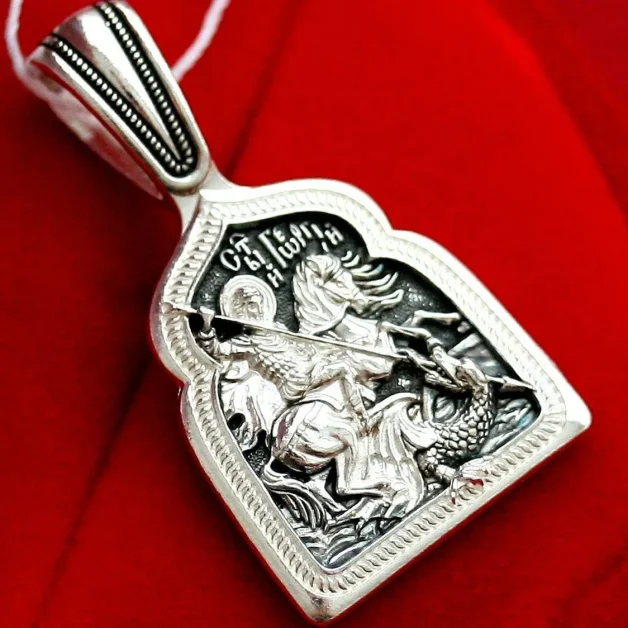
 particles of the relics of St George the Victorious