Submit a prayer note
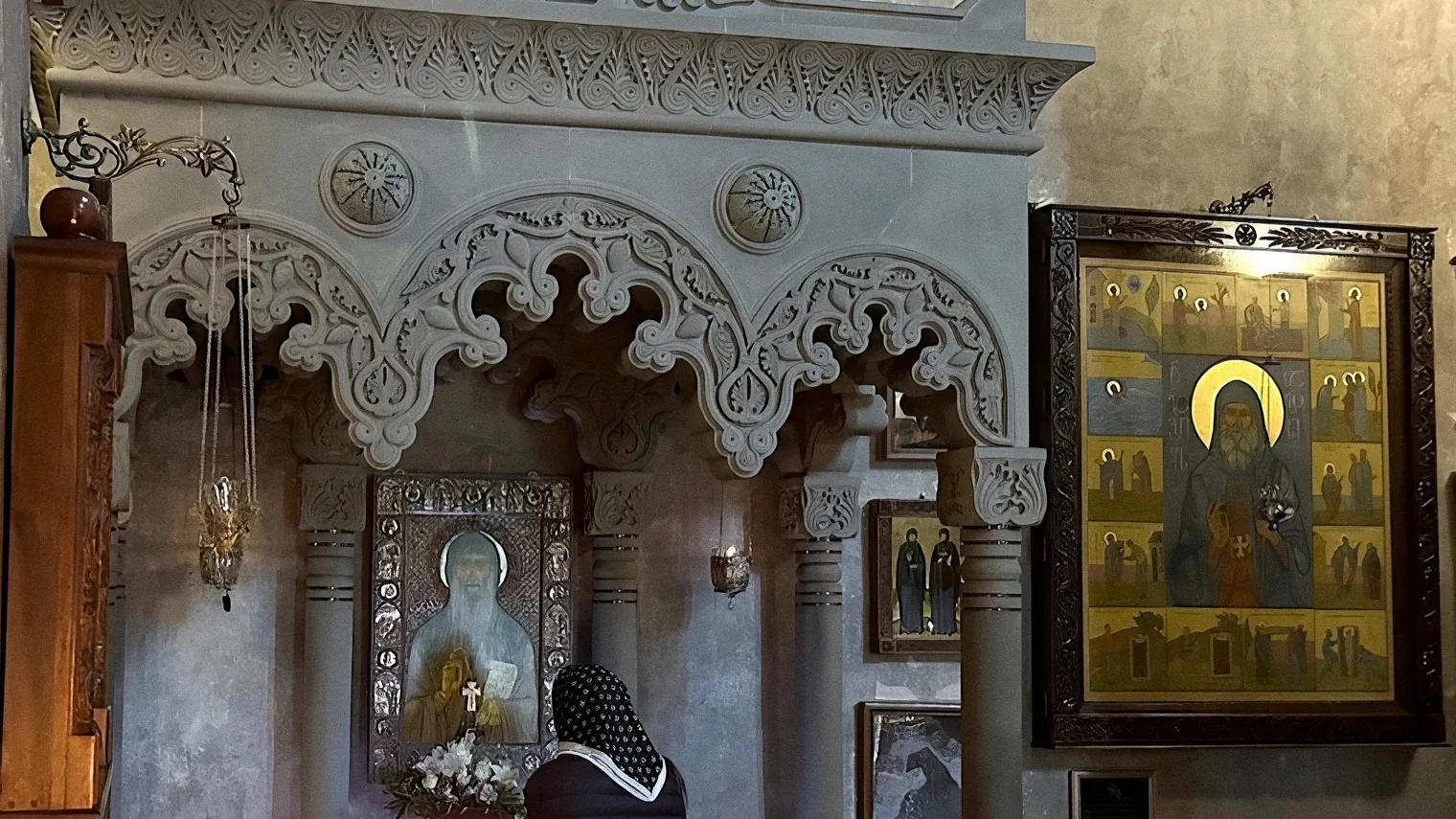
When people speak of the relics of St Gabriel Urgebadze, they usually mean his body, which rests in the Church of the Transfiguration at Samtavro convent in Mtskheta. There is also a smaller and very unusual relic: a glass test tube holding the saint's blood. It was drawn for routine tests a few days before he died, and nobody at the time imagined that pilgrims would one day bow before it.
We know its story from the surgeon Zurab Varazi, who treated Father Gabriel in his last illness. This article follows his account from the hospital laboratory to the convent.
Who St Gabriel was
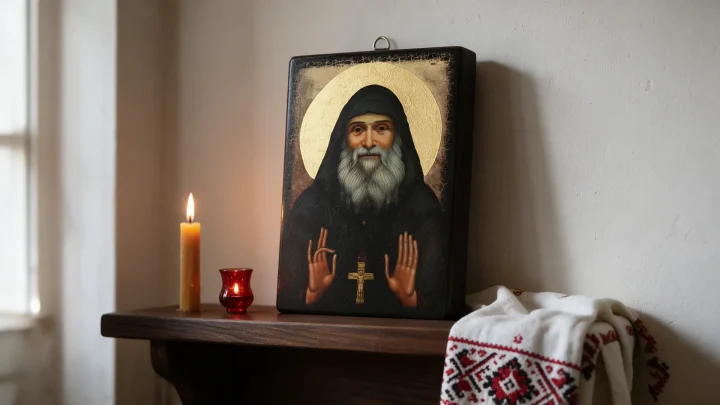
Archimandrite Gabriel (Urgebadze) lived from 1929 to 1995. A confessor of the faith in the years when the Church was persecuted, and a fool for Christ, he was already known across Georgia in his lifetime. He spent his last years at Samtavro and was buried there. In December 2012 the Georgian Orthodox Church glorified him among the saints. His life and the stories of help received through his prayers are on the page of St Gabriel of Samtavro.
The doctor at his bedside
Zurab Varazi was born in Tbilisi in 1952, studied at Tbilisi Medical University and taught surgery for many years. Since the late 1990s he has headed the Social Department of the Georgian Patriarchate.
He first noticed Father Gabriel at Sioni Cathedral in Tbilisi, where the elder blessed people with large icons hanging on his chest beside his cross. Years later Father Gabriel broke the neck of his femur, and serious complications followed: bleeding from the stomach and dropsy. For a long time he would not see a doctor. When a relative offered to bring the surgeon, he answered: "If God blesses it, let him come."
The visits became regular, at times daily. Before each procedure the elder had the doctor say the Lord's Prayer aloud, then a prayer to the Mother of God and Psalm 90, and only then begin. He also insisted on paying, though clergy were treated free of charge, because in his view to thank a doctor is to thank God, who works through the doctor's hands.
The last blood test
A few days before the end, Dr Varazi asked to take blood for tests. Father Gabriel smiled and said: "I do not need your tests and haemoglobin counts." The doctor admitted that if he failed to do everything necessary it would lie heavy on his conscience before God. The elder relented: "Well, if that is so, take as much as you need, so that the Lord will not reproach you."
The next day his condition grew much worse. He refused an operation, even one performed in his own cell, saying he had followed the Lord since the age of twelve and was tired. Patriarch Ilia II, whom the doctor went to see, told him that monks cannot be treated by force and that everything is in God's will. Soon afterwards, after the prayers for the departing soul were read, Father Gabriel died peacefully.
Found again four years later
Some years passed. Then a colleague rang the doctor in some agitation. While clearing out old things during a renovation he had come across a test tube of the elder's blood, drawn four years before, and it looked fresh.
They examined it at once. The blood had not clotted, had not dried and showed no sign of decomposition. A smear from a single drop gave readings close to normal, and specialists who were told its age simply did not believe it. The head of the Department of Pathological Anatomy said she had never met such a case in her practice or read of one in the medical literature. On her advice the sample was sent, without a name, to the Blood Transfusion Institute. Its conclusion was the same: the blood was in satisfactory condition, with only minor changes in the cells.
The Patriarch's blessing
Dr Varazi took the matter to Patriarch Ilia II. The Patriarch listened and said: "Let us wait. If this is truly a sign from God, the Lord Himself will reveal the truth." He gave his blessing not to destroy the blood but to bury it beside the elder's resting place.
So the tube was buried next to Father Gabriel's grave at Samtavro. Over the following years thousands of pilgrims began coming to the grave, and Mother Paraskeva, the elder's cell attendant for many years, decided to take the tube out of the ground and keep it as a holy relic. In 2014 the saint's relics were moved from the grave into the convent church.
The doctor said that the many cases of help after the elder's death, through his prayers, convinced those who had known him that he was a man of holy life, and that the canonisation in 2012 came as confirmation of what they already felt.
Where the vial is kept today
Mother Paraskeva still keeps the vial. Members of the NIKA association of the disabled who travel with us to Georgia can receive her blessing with it: she makes the sign of the cross over each of them. Her own memories of St Gabriel and his teaching are in our article on Mother Paraskeva.
The Orthodox Church honours relics like this as a sign that God glorifies His saints after their death. The vial has no power of its own. Pilgrims approach it as they approach the saint's body, with prayer, asking St Gabriel to pray for them, and any help comes from God, by His mercy. The Patriarch's own words, to wait and let the Lord reveal the truth, are a good guide for anyone who comes to it.
Visiting the relics of St Gabriel Urgebadze
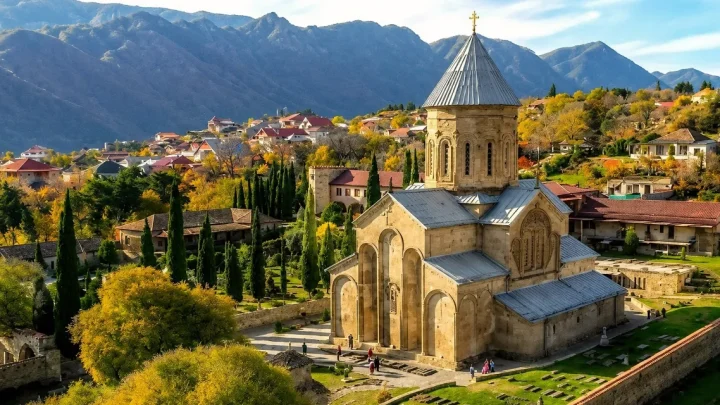
The relics of St Gabriel rest at Samtavro convent in Mtskheta, twenty kilometres from Tbilisi. Our pilgrimages to Georgia are built around it: the group spends two days at Samtavro, attends the service at the relics and has time to pray without hurrying. If you cannot travel, you can send the names of your family to the relics through a prayer note; we bring the notes on our nearest trip or email them to the convent.
 Samtavro monastery