Submit a prayer note
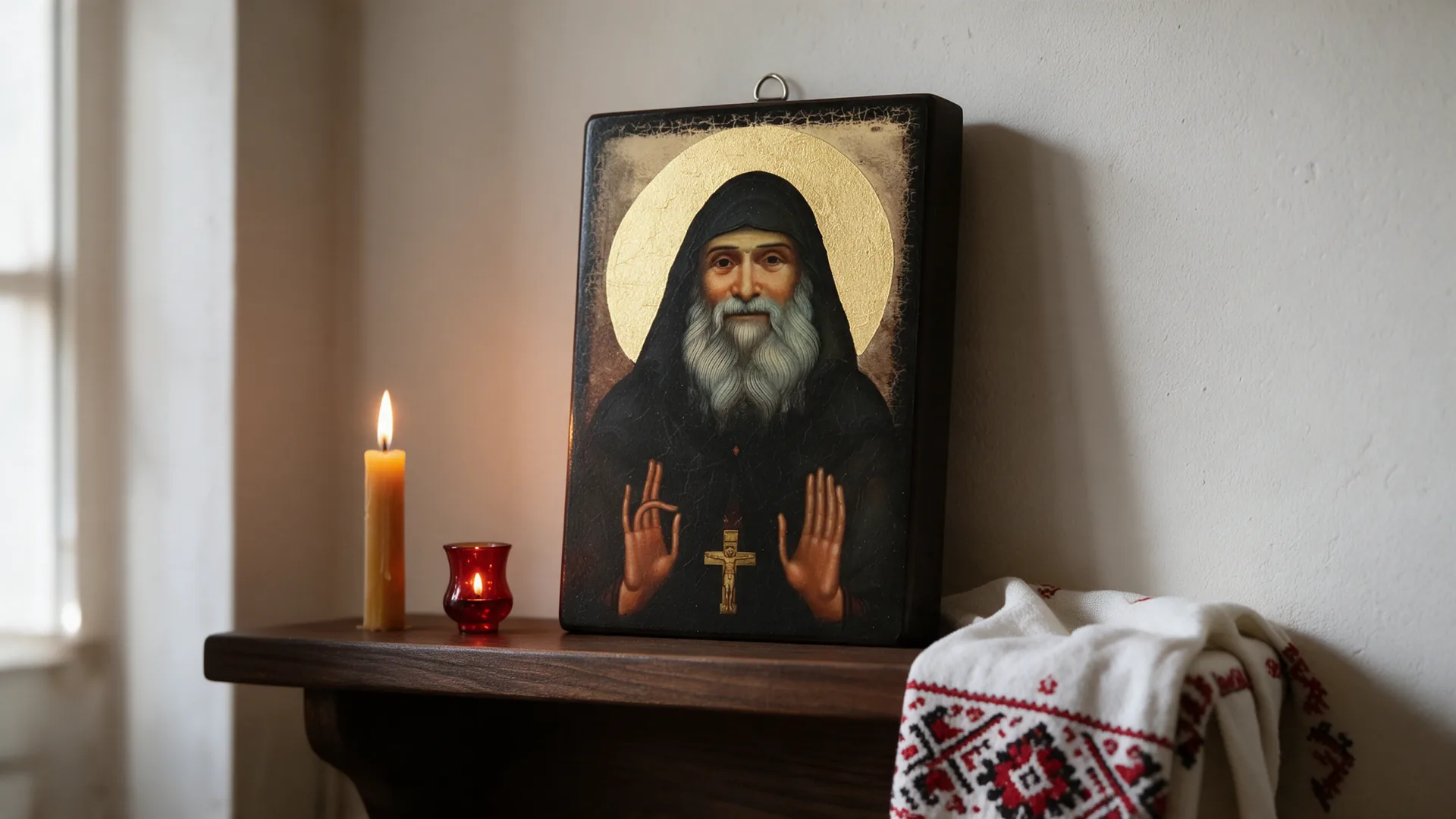
St Gabriel of Samtavro (Urgebadze) left no books. What we have are the memories of people who knew him: his doctor, priests, his cell attendant, pilgrims. Most St Gabriel Urgebadze quotes are therefore tied to a particular moment, and they make more sense when you know who was in the room.
The sayings below come from two sources. The first is the account of the surgeon Zurab Georgievich Varazi, who was Father Gabriel's attending physician and later became Chairman of the Social Department of the Georgian Patriarchate. The second is the memories of Mother Paraskeva (Rostiashvili), who served as the elder's cell attendant for many years. The words are given as they appear in those accounts, each with a short note on when and to whom they were spoken.
Who St Gabriel was
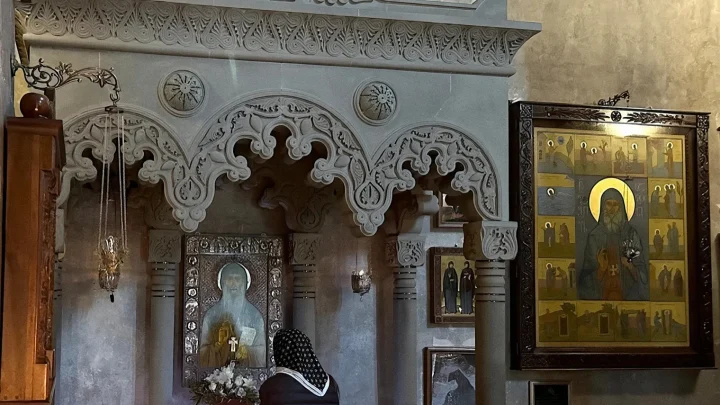
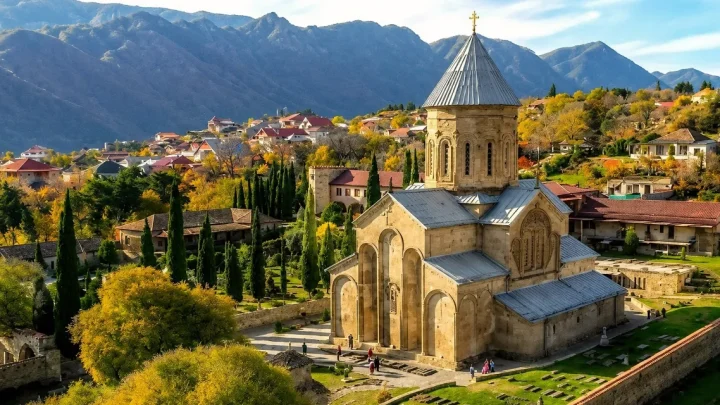
Archimandrite Gabriel (Urgebadze) lived from 1929 to 1995. A confessor of the faith in the years of persecution and a fool-for-Christ, he spent his last years in Mtskheta, and his relics now rest at Samtavro monastery there. The Georgian Orthodox Church glorified him among the saints in December 2012, and his feast is kept on 2 November. The St Gabriel of Samtavro page tells more about his life, help received through his prayers and prayer notes to his relics.
Dr Varazi was struck by how little schooling the elder had had. Father Gabriel had not even completed several years of school, and yet he spoke as if his knowledge came from living communion with God.
A confessor of Christ
In the 1960s, during the festive demonstration on 7 November, Father Gabriel set fire to a huge portrait of Lenin hanging on the Government House. He later told Dr Varazi what he said at that moment:
"Lord Jesus Christ, I am coming to You."
After his arrest his crosses and icons were taken from him. Alone in an empty room, he pulled apart a broom, tied the twigs together with thread and made a small cross. When the guard took that too, he stretched out his arms and said:
"I myself am a cross."
Later he was sent to a psychiatric hospital. When the attendants tried to cut his hair by force, he told them:
"I am a monk. You may not cut my hair."
After these years, Dr Varazi recalls, the saint often said to people:
"The Lord will never abandon you. People may persecute and reject you, but God will always be near."
On blessing and prayer
Dr Varazi first saw Father Gabriel at Sioni Cathedral, then the cathedral church of Tbilisi. People hurried to him for a blessing. He laid his hand on each person's head and quietly said:
"May the Lord Christ bless you."
Later, after a fractured hip and serious complications, the elder still refused to see doctors. When a relative asked whether he might bring a surgeon he knew, Father Gabriel answered:
"If God blesses it, let him come."
Before one procedure the doctor was quietly saying the Lord's Prayer while he disinfected his hands. Father Gabriel asked him to say it aloud, then to read a prayer to the Theotokos and Psalm 90. Only then did he say:
"Now begin your work."
On doctors, illness and death
When the procedure was over, Father Gabriel told Mother Paraskeva to bring money for the doctor. Dr Varazi protested that the Patriarchate treated clergy without charge. The elder stopped him:
"I decide here, not you. Whoever does not thank a doctor does not thank God."
Then he stroked the embarrassed doctor's head and added:
"Dear doctor, a physician's work is God's work. The Lord Himself acts through the hands of the doctor. Therefore, to thank a doctor is to thank God."
One morning Dr Varazi felt unwell, with high blood pressure and pain in his heart. When he felt a little better he went to see the elder, who looked at him and began to speak about death:
"Everyone is afraid of death. Yet death is only a brief moment, a passage into another life. A person has barely closed his eyes here before his spiritual eyes are opened. He sees his body from outside and thinks: why should I return to it? Without it, everything feels so light and free."
The doctor said he had long since stopped fearing death. Father Gabriel smiled, asked whether he knew he already had one foot there, and, seeing his alarm, pointed out that fear still lived in him after all. Then he went on:
"Every good deed brings a person closer to God, and every evil act takes him farther away. Our whole life consists of these steps – upward or downward. Therefore, strive to live in such a way that you are always ascending towards the Lord."
On love, humility and good works
Once, while Dr Varazi and Mother Paraskeva sat talking with him, the elder suddenly fell silent, raised his hands towards the icon of the Saviour and prayed for about fifteen minutes. He then spoke of the end of earthly time, and afterwards, as if to calm them, said more gently:
"The most important thing is to live according to God's commandments. Learn to love one another and preserve love for your neighbour. I will carry your love and your good deeds before the Lord."
Mother Paraskeva remembered a young man who came for a blessing but said he was too busy when the elder asked for help with a small task. When he had gone, Father Gabriel said:
"Now he will pray for a long time. But will the Lord accept such a prayer if he refused his neighbour? Good deeds open the doors of the Kingdom of Heaven, humility leads us in, and love helps us to see God."
Of people who repaid his kindness with mockery he would say:
"Now I pity them even more and love them even more."
Humility was the virtue he valued most. If he had to rebuke someone sharply and the person had not come to make peace by evening, he went to them himself and asked forgiveness first. More of what she remembered is in our article on Mother Paraskeva.
On praying for those in authority
Dr Varazi once asked how he could pray sincerely for rulers he could not accept inwardly. Father Gabriel first asked whether he prayed for his son, his parents, his neighbours. Then he said:
"Should we not ask God to transform what is evil into what is good?"
"Ask the Lord to grant the ruler a good heart and a wise mind. Then the government will also be wise."
In the same conversation came two sayings the doctor says the elder repeated often:
"The world around us reflects what we ourselves are."
"If you sincerely turn to God and live according to your conscience, the Lord will surely send you what is best."
Last words, and where to remember him
Some of his words were remembered as prophetic. At Easter 1987 in Samtavro he told Zaza Intskirveli, whom he had only just met:
"In thirteen years you will work for the Church, though you will not wear the monastic habit."
Exactly thirteen years later Zaza was asked to head the agriculture department of the Georgian Patriarchate.
A few days before his death, when the doctors begged him to agree to an operation in his cell, Father Gabriel refused:
"Since the age of twelve, I have followed the Lord. I am tired. May the Lord receive my soul."
How blood was taken from him in those last days, and how that vial became a relic, is told in the story of St Gabriel's blood. Accounts of people who turned to him in prayer after his repose are collected in help through the prayers of St Gabriel.
Icons with a particle of cloth from his relics, prayer ropes, oil and candles from the St Gabriel series are blessed at Samtavro monastery, most of them on the saint's relics. An icon of St Gabriel at home is a good place to reread his words and to ask his prayers for yourself and those you love.
 Samtavro monastery