Submit a prayer note
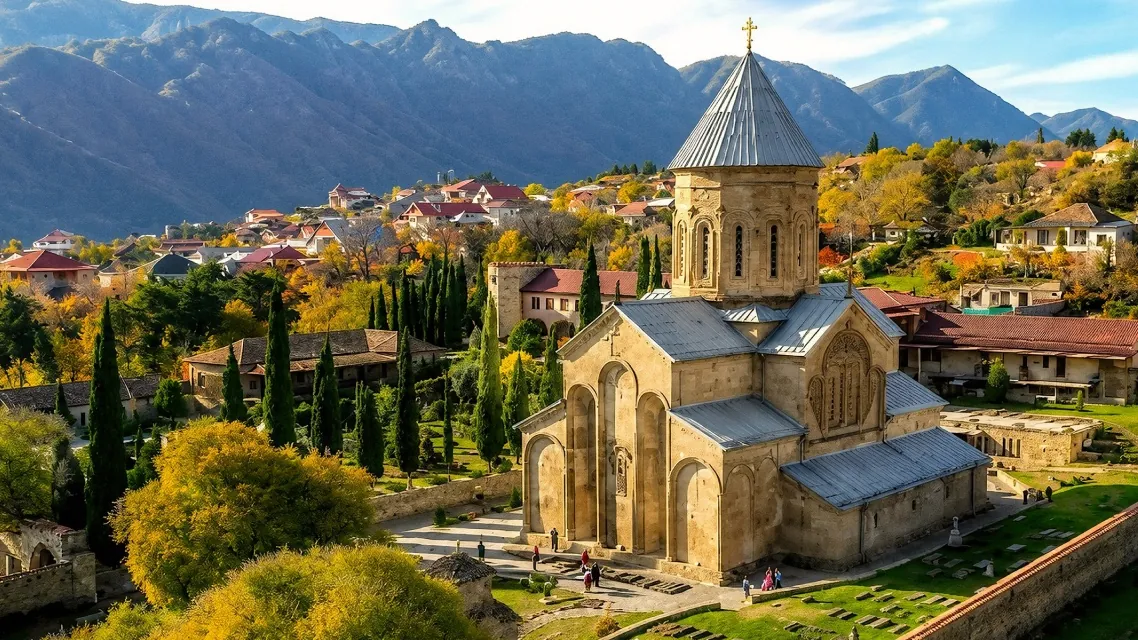
Samtavro monastery stands in Mtskheta, the ancient capital of Georgia, twenty kilometres from Tbilisi. It was founded in the 4th century on the spot where St Nino, Equal-to-the-Apostles and the enlightener of Georgia, lived and prayed. Today it is a working convent of the Georgian Orthodox Church.
Most pilgrims come to Samtavro for one reason: the relics of St Gabriel (Urgebadze) rest in its main church. Yet the convent is one of the oldest Christian sites in the country, and knowing a little of its history helps you see what you are looking at once you step through the gate.
Samtavro monastery in Mtskheta: where it is
Old Georgian chronicles called Mtskheta a "second Jerusalem", because the faith of the whole country grew from this small town. Samtavro lies within the town itself, close to the patriarchal Svetitskhoveli cathedral, so most visitors see both on the same day.
It is a living convent rather than a museum. The sisters keep a monastic rule, and visitors are guests: dress, photography and filming follow the convent's own rules, and it is wise to check them before you arrive.
From St Nino's bramble to a royal church
St Nino prayed beside a blackberry bush on this site. After her death at Bodbe, King Mirian built a small church next to the bush. It still stands and is known as the Little Church of St Nino. According to tradition, the first large church on the grounds was also raised under Mirian III in the 4th century.
The church was destroyed many times and rebuilt each time. In the first half of the 11th century, under King George I and with the blessing of Catholicos-Patriarch Melchizedek I, it was greatly enlarged. The south doorway dates from that work, and its carved ornament has no parallel anywhere else in Georgian architecture.
From the 5th century Samtavro was the seat of a bishop and had a community of monks. The convent itself was founded in 1820. Abbess Nina Amilakhvari, who had taken monastic vows in 1810, gave more than fifty years to Samtavro and travelled across Georgia to raise money for its restoration.
Closure and revival
Under Soviet rule the convent was closed. The sisters were left a single room, a workers' cooperative moved into the grounds, then a hospital, and part of the buildings went to the Mtskheta theological seminary. Full monastic life returned only at the end of the 20th century.
Since then Abbess Ketevan (Kopaliani) has led the community. She is a spiritual daughter of Patriarch Ilia II and received guidance from St Gabriel himself. Many abbesses of other Georgian convents were formed under her, and church hymns written to her poems are sung on major feasts. The Patriarch has his own tie to the place: his godmother was abbess here, and as a boy he often visited.
The sisters follow the Athonite rule of the Iviron monastery. They rise at 3:20 for their private prayer rule, the Midnight Office begins at four and lasts until dawn, and after a short rest the Divine Liturgy is served.
What to see at Samtavro
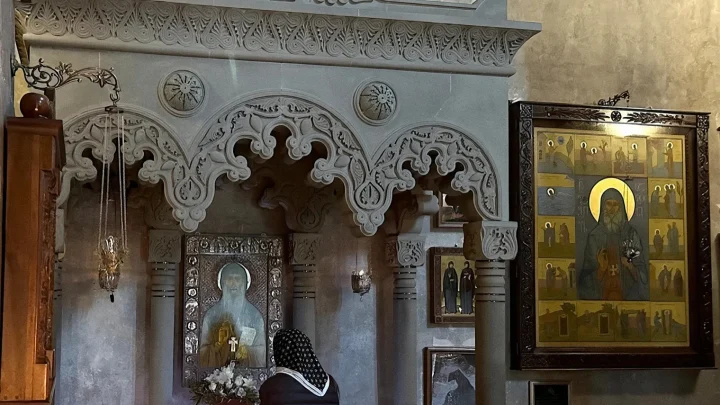
The convent keeps the cross-domed Church of the Transfiguration, the Little Church of St Nino, a bell tower of the 15th to 17th centuries, an 18th-century defensive tower, a 15th-century iconostasis and 17th-century frescoes. The Church of the Archangel Michael stands in the southern part of the grounds, and the main church has side chapels of St John the Baptist, St John Chrysostom and the holy King Mirian and Queen Nana.
The shrines pilgrims come to venerate:
- the bramble bush of St Nino, called Makvlovani;
- a particle of the Life-giving Pillar of Svetitskhoveli;
- the icons of the Iveron Mother of God and of St Nino;
- the tombs of King Mirian and Queen Nana, the first Christian rulers of Georgia;
- the relics of St Gabriel of Samtavro.
Samtavro monastery and St Gabriel
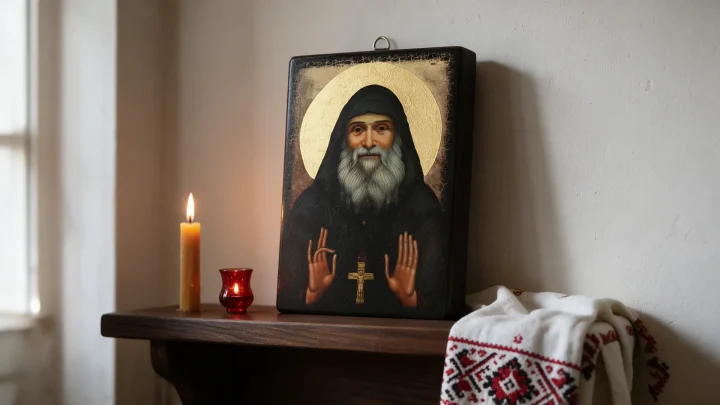
Father Gabriel (Urgebadze) spent the last years of his life at Samtavro and was the convent's confessor for ten years. He was buried here, and in 2014 his relics were moved into the Church of the Transfiguration. Thousands of pilgrims now come to them. People venerate the reliquary, pray for themselves and their families and leave names to be remembered. Any help comes from God, by His mercy and through the prayers of the saint. His life and the stories of help through his prayers are on the page of St Gabriel of Samtavro.
Visiting with a pilgrim group
Samtavro is the main goal of our pilgrimages to Georgia. The group spends two days there, so there is time for the service at the relics of St Gabriel and for quiet prayer without rushing. The same programme includes Svetitskhoveli and Bodbe, where St Nino rests. Details and the next trip are on the Samtavro monastery page.
If you cannot travel, you can still send the names of your family to the relics. We bring prayer notes for the living and the departed to Samtavro on every trip and send them to the convent by email in between. You can submit one on the prayer notes page.

 Samtavro monastery