Submit a prayer note

Today almost any knowledge about health is open to us. Thousands of articles describe the harm of smoking, alcohol and fast food, and nearly everyone knows that cigarettes ruin the lungs, sugar damages the blood vessels and a sedentary life takes years away. Bad habits and the Orthodox faith may look like separate subjects, yet it is faith that answers the question medicine leaves open: why, knowing all this, do people go on smoking, drinking, overeating, losing sleep and wearing themselves out with worry?
It is as if a person spends his reserve of strength day by day of his own accord. He chooses slow self-destruction over health and misses a simple truth: the body is the temple of the soul, and ruining it is both a sin and a folly. Let us try to understand calmly, without judging, where this blindness comes from. Understanding the cause is already the first step towards healing.
Illness as a cry of the soul
Many illnesses are first conceived in the depths of the spirit and only later appear in the body. Sickness is often more than suffering of the flesh, it is also the voice of a soul that has moved away from the Source of life.
Often a person seeking healing knows where the wound lies and how the sorrow began. Yet out of fear, pride or unwillingness to repent he does not dare to open to God everything hidden in his heart. And the Lord does not turn away from the one who suffers. He waits patiently for the moment when a person comes to Him in humility and calls on Him.
The Lord allows sorrows and illnesses to bring us to our senses, never to destroy us: to cleanse the heart and save the soul. Through bodily suffering He teaches us to seek first God and His righteousness, and earthly goods only after that. When the soul sincerely repents, leaves its sins and gives itself into God's hands with living faith, grace heals the broken heart, binds up the wounds of the soul and eases the suffering of the body.
The illusion that it will not happen to me
The most dangerous trap is the hope that we will get away with it. A young man lighting his first cigarette does not think about lung disease forty years later. A woman who eats sweets every evening does not connect them with diabetes in the future. Someone who drinks almost never admits to being dependent. Everyone feels there is still time and trouble will pass them by.
This is self-deception. God made our body remarkably strong and patient, but even that patience has a limit. Illness builds up gradually, like rust on iron, and by the time a person notices, it is often too late.
Why does God not stop us by force? Because freedom and faith are His greatest gifts. The Lord wants a person to come to understanding freely and of his own will. Without freedom there would be no spiritual struggle and no love.
Why bad habits are so hard to break
Dependence rarely begins with the body. More often its root is emptiness of the soul. A person does not know why he should get up in the morning, he has no aim, no joy and no peace, only anxiety, boredom, resentment and fear. To silence this pain he reaches for a cigarette for imaginary calm, for a glass for imaginary ease, for sweets as a substitute for happiness.
This is a cry of a soul that does not know where to find real joy far more than a weakness of character. Many people were simply never taught another way. As children nobody showed them that one can pray when afraid, or explained that patience and work bring deep joy rather than a moment of pleasure. So a person grows up with emptiness inside and tries to fill it with food, smoke and wine, but the emptiness only grows.
Pride that closes the eyes
There is a more bitter reason too. Some people do not see the truth because they do not want to. A person builds a comfortable wall: I am an adult, I decide how to live, there is no God, and if there is, He has nothing to do with me.
Such pride becomes a heavy barrier. The Lord knocks at the heart quietly and never breaks the door down. If a person covers his ears and demands to be left alone, God steps back and waits, sometimes for years, sometimes for a whole life. Meanwhile the person keeps believing that a cigarette relieves stress, a drink warms the soul and sweets are a small joy. In reality these are chains, and he has put them on himself. The truth is simple, but accepting it takes humility.
Passions harm more than the body
When a person smokes, drinks or overeats, it is not only the liver and lungs that suffer. The soul suffers, because each such concession is a small betrayal of oneself and of one's calling. A person loses his will and turns from the master of his body into its slave. The words "I can't give it up" are heard from people of every age, and they are true: dependence eats into the soul, and breaking that chain without God's help is very hard.
Centuries ago the Holy Fathers called gluttony the mother of the passions and drunkenness the door to many other sins. The ancient books say nothing about smoking, yet in spirit it belongs to the same kind: neglect of the gift of life.
The Church also knows special intercessors for those who struggle with a destructive passion. For deliverance from drunkenness people pray before the icon of the Mother of God "The Inexhaustible Cup", to the martyr Boniface and to St Moses the Black. You can send a prayer note for the health of someone you love, and the article on prayer for the sick explains how to pray for a relative who is ill in body or soul. Help from a doctor or an addiction specialist is fully compatible with faith: prayer and treatment go side by side.
The first step: admitting our blindness
Clear sight begins with honest words: I cannot see, I am wrong, I do not know how to live rightly, help me. There is no need to hide behind clever arguments. Tell God simply, like a child: "Lord, I smoke, I overeat, I get angry and I am afraid. I cannot stop by myself. Help me and open my eyes." Healing begins with a prayer like this.
Do not expect to wake up a different person overnight. The truth opens gradually, like the dawn. First you notice that you no longer want a cigarette after lunch. Then your hand stops reaching for the bottle. One day you happily choose an apple instead of a cake. This is how grace works: quietly, almost unnoticed, and truly.
Much also depends on us. The Lord said: "Ask, and it shall be given you; seek, and ye shall find; knock, and it shall be opened unto you" (Matthew 7:7). These words call for personal effort: to ask, to seek and to knock, rather than simply wait.
With God nobody is beyond hope
A person often thinks: I have fallen too low, I have destroyed myself for too many years, I will never rise again. This is the most dangerous lie the enemy of mankind whispers. Despair is heavier than any illness.
In Orthodoxy there are no hopeless people, only repentant ones. The thief crucified beside Christ had lived a terrible life, yet he said, "Lord, remember me", and heard in reply: "Today shalt thou be with me in paradise" (Luke 23:42-43). One minute of sincere repentance can outweigh years of falling. The Lord looks at your heart now, not at how long you have been dependent. If it reaches even a little towards the light, He is already near.
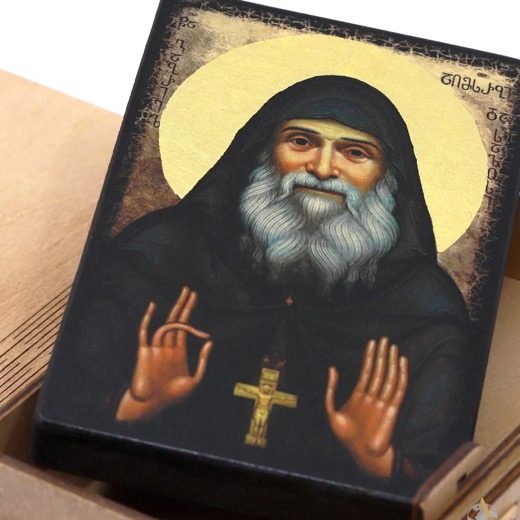
Over 26 years the Orthodox association NIKA and the Andcross pilgrimage centre have seen people give up smoking after thirty years, seen those who drank begin a new life and return to their families. They were no stronger than others. They trusted God and said: "Lord, I am weak, let Thy will be done in me." For this kind of help we organise trips in the Health of Soul and Body programme: prayer at the relics of St Gabriel, confession, Communion, talks with a priest and care for the body at a sanatorium. Dates of the next trips are in the pilgrimage schedule.
Ask yourself honest questions: why do I keep doing what harms me, what am I silencing, what am I running from? The answers hold no fear when God is near. Tell Him: "Lord, I am tired of destroying myself. Help me see the truth, and I will take at least one step towards You." That step can begin a life in which health of soul and body is one, and joy comes from each day lived with God.